Category: Blog

Your blog category

  • Top 6 Lenders for Personal Loans for High Income Individuals in 2026

    Personal loans for high income individuals

    Top 6 Lenders for Personal Loans for High Income Individuals in 2026

    Last updated: 2026-10-16

    High earners often hit a wall when trying to access liquidity. You might see a massive salary on your tax returns, yet finding a lender that understands your complex cash flow or specific tax structures can feel like a marathon. It isn’t just about grabbing the cash. It is about finding a partner that respects your time and your financial sophistication.

    For many top-tier professionals—surgeons, corporate executives, or specialized engineers—standard algorithmic lending models often miss the mark. These models fail to capture the nuances of your actual wealth. You might have significant deferred compensation, stock options, or seasonal bonuses that don’t show up on a traditional pay stub in a way that a basic credit model understands. This discrepancy can lead to frustrating denials or suboptimal interest rates despite an impeccable net worth.

    Choosing the right lender requires looking beyond surface-level interest rates. You need to consider the speed of funding, the flexibility of repayment terms, and the ease of the digital interface. For those with significant assets, the friction of paperwork can be a dealbreaker. If you are closing a real estate deal or a private equity investment, spending three days uploading tax returns to a legacy bank is not an option.

    This list focuses on providers that balance efficiency with the specific needs of high-net-worth borrowers. We prioritized those who offer digital-first experiences and rapid deployment of capital. We want to highlight lenders that won’t slow down your momentum when you need to move quickly on an opportunity.

    1. Discover
    2. Avant
    3. JetzLoan
    4. OneMain Financial
    5. LendingPoint
    6. Upgrade

    How These Financial Providers Were Evaluated

    The evaluation process focused on the specific requirements of high-income earners. This includes the ability to secure significant loan amounts without the cumbersome requirement of collateral. Many professionals need the ability to borrow against future earnings or current assets without a hard credit pull during the initial phase. We specifically looked for lenders that utilize “soft pulls” for the pre-qualification stage. This allows you to run the numbers without any risk to your credit score.

    Speed of capital deployment was another critical metric. A high-earner might need funds for a sudden real estate opportunity or a strategic investment. Therefore, lenders that offer rapid funding, sometimes within twenty-four hours or even a single hour, were prioritized. We also looked at the transparency of their digital application processes to ensure no hidden surprises. A lender that hides “origination fees” deep within a 20-page PDF is a red flag for a borrower who values efficiency and clarity.

    Furthermore, we examined the scalability of the loan products. A lender that only offers $5,000 might be useful for a minor repair, but it fails to serve the needs of someone looking to consolidate high-interest debt or fund a significant lifestyle upgrade. We sought out providers that offer a meaningful ceiling on loan amounts, typically $30,000 or higher. This ensures the liquidity provided is actually useful for high-net-worth strategic planning.

    Comparative Overview of Top Lenders

    Lender Name Max Loan Amount Funding Speed Interest Rate / APR Info Credit Check Impact
    Discover $40,000 Next business day 6.99% – 24.99% No impact for pre-approval
    Avant See site See site See site See site
    JetzLoan $50,000 As little as 24 hours See site No hard credit pull
    OneMain Financial $30,000 As soon as 1 hour Starting at 11.99% APR No impact for checking
    LendingPoint $36,500 See site See site No impact for checking
    Upgrade $50,000 Fast funding See site No impact for checking

    Ranking the Best Lenders for High Earners

    1. Discover

    Discover – discover.com

    Discover is a solid choice for those who value a brand backed by the full faith and credit of the U.S. Government. Their personal loans are straightforward, offering amounts from $2,500 up to $40,000. It is a reliable choice for those who want stability and a well-established institution behind their debt. If you are tired of fintech startups that might pivot their business model overnight, Discover offers a sense of permanence and institutional security.

    The platform is incredibly user-friendly, allowing for a quick check to see if you are pre-approved. This is vital for high-income individuals who do not want to see their credit score take a hit just to see what kind of terms they might qualify for. It is a low-friction way to explore your options. The digital interface is streamlined, minimizing the time spent navigating through unnecessary menus. This is a luxury in itself for the time-constrained professional.

    Pros:

    • Funds can be sent as early as the next business day.
    • No fees and flexible terms are available.
    • Pre-approval check does not impact your credit score.

    Cons:

    • Maximum loan amount is capped at $40,000.

    2. Avant
    Avant – avant.com

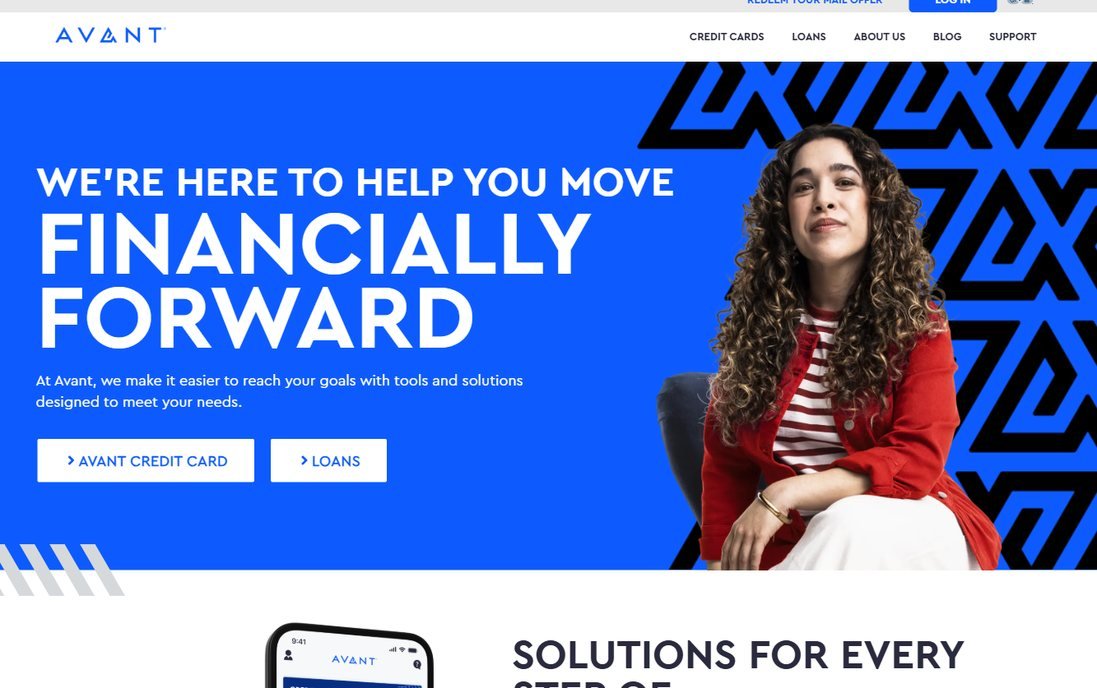
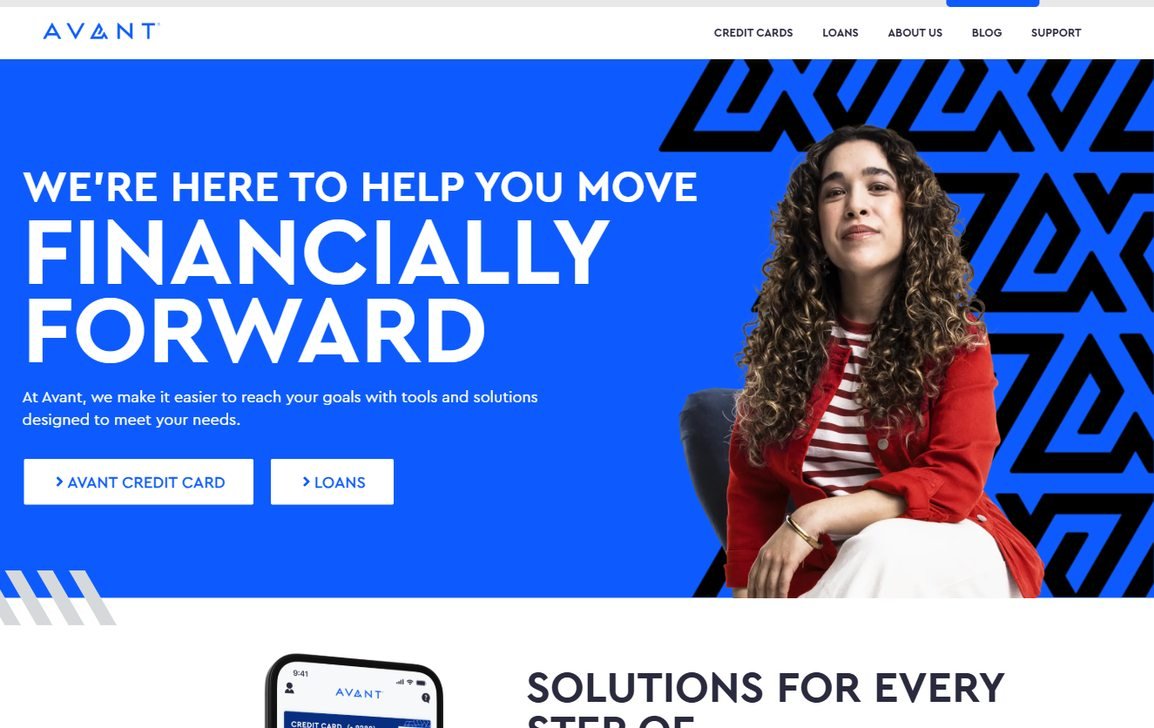
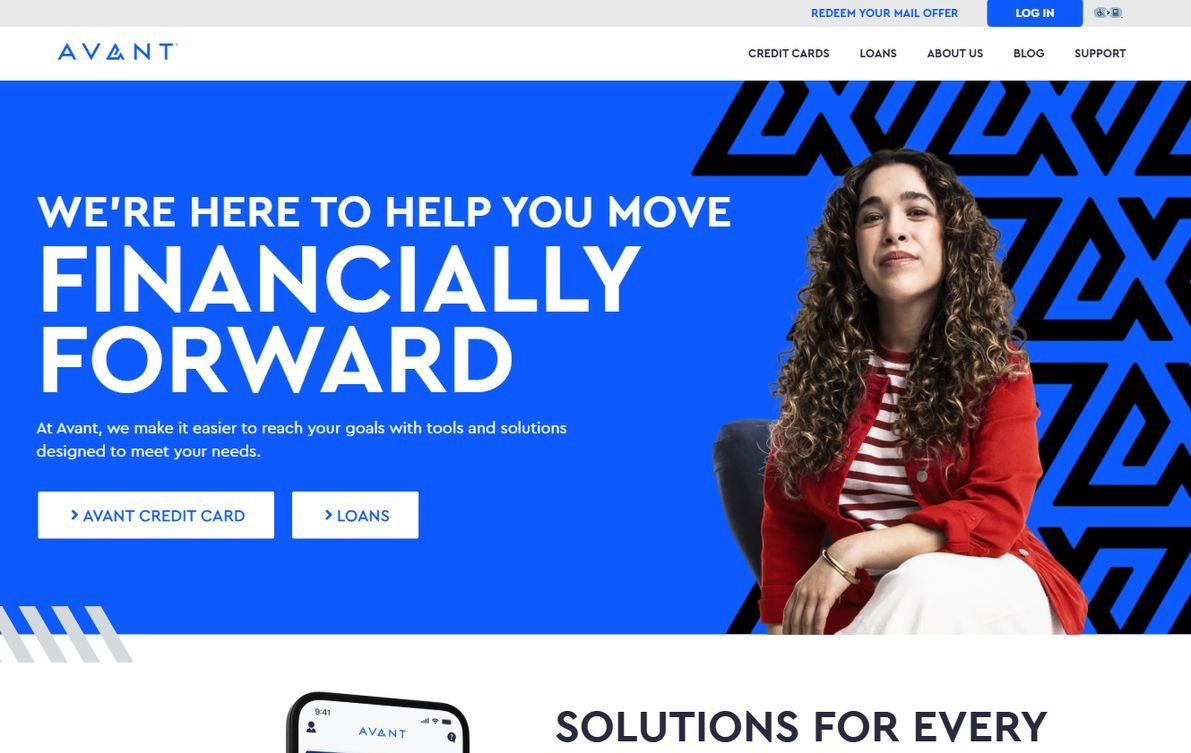
    Avant focuses on providing tailored solutions for people who are actively moving their financial lives forward. They offer a variety of products, including credit cards and loans designed for debt consolidation or home improvements. It is a versatile option for those who need a lender that can adapt to different life stages. For example, your debt-to-income ratio might fluctuate during a transition from a high-earning associate to a partner in a firm.

    The company emphasizes flexible choices and friendly support, making it easier to navigate the complexities of personal debt. Whether you are looking for a quick fix for an unexpected expense or a long-term strategy for debt management, their tools are built to simplify the journey. Their approach is less about “one size fits all” and more about providing a menu of options that align with your specific financial velocity.

    Pros:

    • Flexible loan solutions for various needs.
    • User-friendly digital tools for managing finances.
    • Provides multiple paths for debt management.

    Cons:

    • Specific loan terms and limits are not explicitly detailed.

    3. JetzLoan
    JetzLoan – jetzloan.com

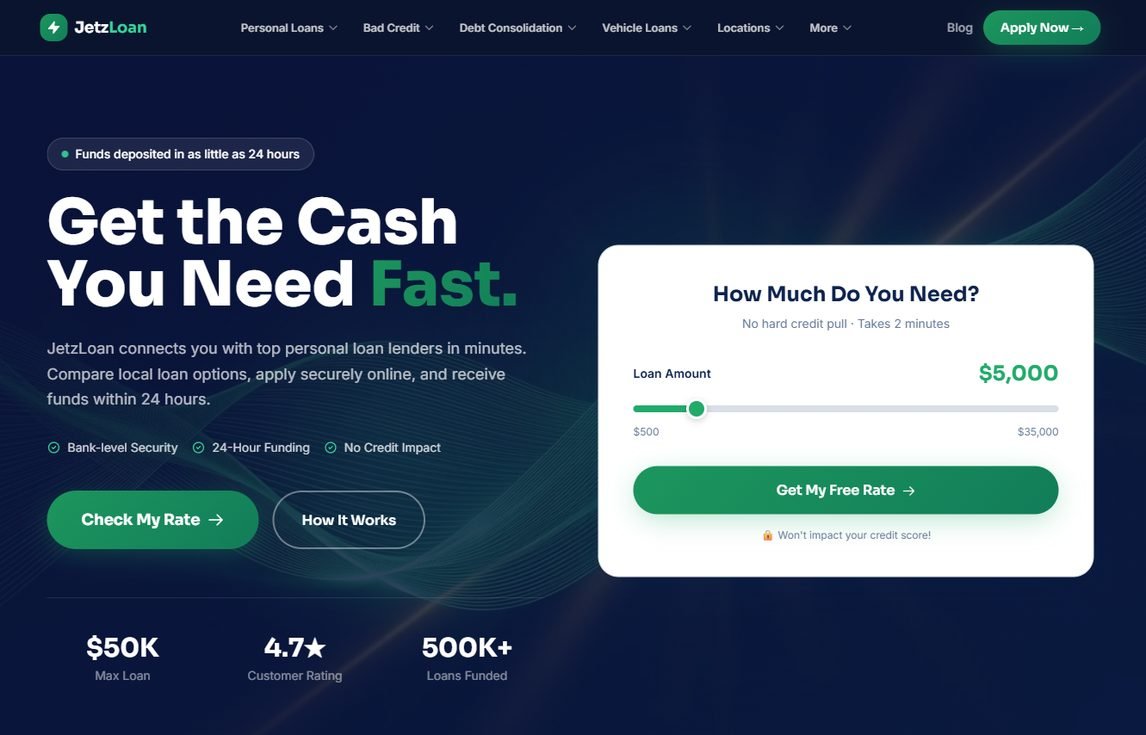
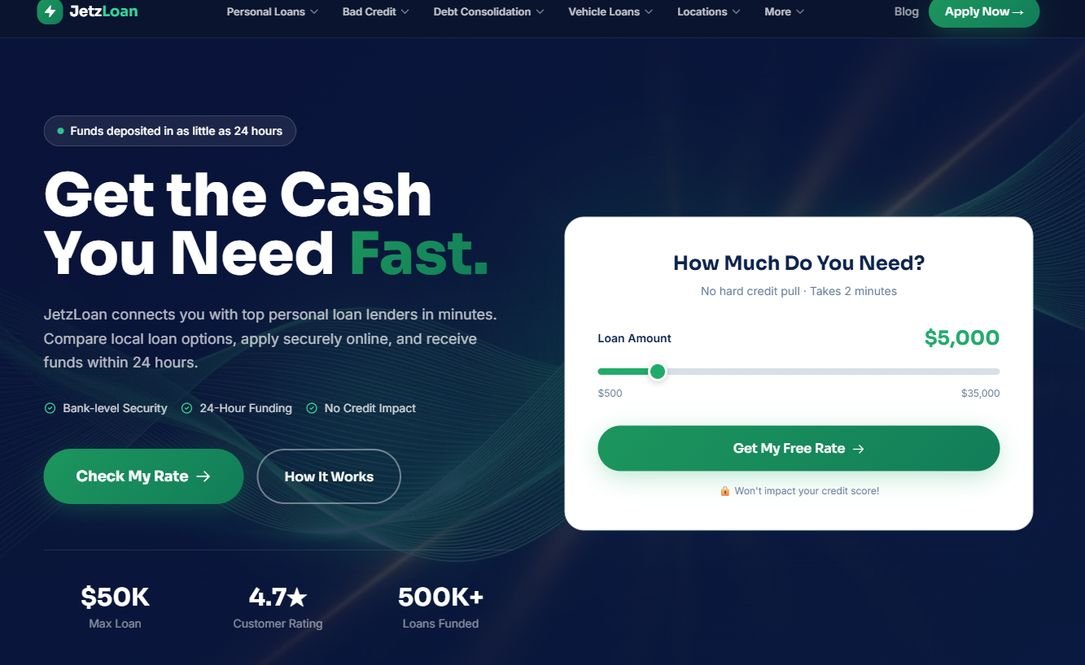
    For the professional who needs capital yesterday, JetzLoan is a high-speed contender. They connect you with top lenders in minutes and can facilitate funding in as little as twenty-four hours. This is perfect for those who find the traditional banking pace to be far too sluggish for their lifestyle. If you have been presented with a time-sensitive investment opportunity—perhaps a real estate auction or a private placement—the speed offered here is a significant competitive advantage.

    The process is incredibly streamlined, taking less than two minutes to complete a simple form. With a maximum loan amount of $50,000, they cater to significant needs without the headache of a hard credit pull during the initial rate check. This “marketplace” model allows you to see a broad spectrum of options without the repetitive task of applying to multiple banks individually. It saves you hours of administrative overhead.

    Pros:

    • Extremely fast funding, potentially within 24 hours.
    • No hard credit pull required for initial rate check.
    • High maximum loan amount of $50,000.

    Cons:

    • The platform acts as a connector rather than a direct lender.

    4. OneMain Financial

    OneMain Financial – onemainfinancial.com

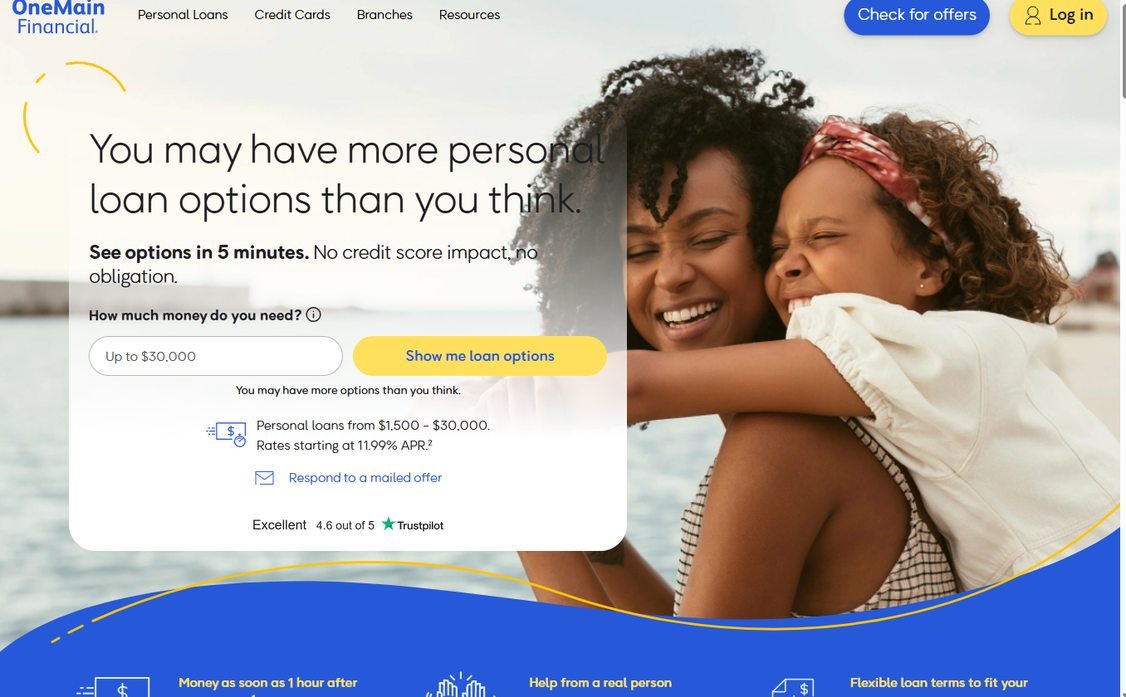
    OneMain Financial is a powerhouse for those who prefer a mix of digital ease and human interaction. They offer personal loans ranging from $1,500 to $30,000, with rates starting at 11.99% APR. Their ability to provide money as soon as one hour after signing is a massive selling point for urgent needs. This level of speed is rare in the unsecured loan market and makes them a top choice for emergency liquidity.

    If you prefer talking to a real person, you can visit one of their 1,300 branches. This hybrid model is ideal for high earners who might want the convenience of an app but still value the security of a face-to-face meeting when dealing with significant financial matters. Having a physical location to visit can provide peace of mind, especially if you need to discuss complex repayment structures or specific documentation that a purely digital lender might reject.

    Pros:

    • Rapid funding, potentially in just one hour.
    • Extensive branch network for in-person support.
    • Flexible terms from 24 to 60 months.

    Cons:

    • Rates for unsecured loans can be higher than secured options.

    5. LendingPoint

    LendingPoint – lendingpoint.com

    LendingPoint positions itself as a solution for various life events, from weddings to medical expenses. They offer loans between $1,000 and $36,500, providing a solid middle ground for those who need more than a small micro-loan but less than a massive mortgage. Their underwriting process is designed to be more sophisticated than basic consumer lenders, often looking at a broader picture of your financial health.

    The platform is designed to make money easy, with a process that allows you to check your rate without impacting your credit score. This allows you to shop around and compare your options against other lenders without any financial penalty to your credit profile. This ability to “window shop” is critical for high-earners who are often managing multiple lines of credit and need to be precise about which debt they are taking on and at what cost.

    Pros:

    • Wide range of loan purposes supported.
    • Check rates without impacting credit scores.
    • Significant loan amounts up to $36,500.

    Cons:

    • Loan amounts are lower than some specialized lenders.

    6. Upgrade

    Upgrade – upgrade.com

    Upgrade is a comprehensive financial tool for the modern consumer, offering personal loans up to $50,000. They focus on speed and high-tech integration, allowing you to see rates in minutes. It is an excellent choice for those who want to manage their loans, savings, and checking in one ecosystem. Their technology-forward approach reduces the “friction of friction,” meaning fewer steps between application and disbursement.

    Their ecosystem is quite robust, with options to earn cash back on various transactions and high APY on savings. It is a “one-stop-shop” approach that appeals to high earners who want to consolidate their financial life into a single, efficient digital interface. By centralizing these functions, you can get a clearer view of your total liquidity at any given moment, which is essential for sophisticated cash flow management.

    Pros:

    • Large loan limit of up to $50,000.
    • Integrated financial ecosystem with savings and checking.
    • Fast rate checking with no credit impact.

    Cons:

    • The complexity of the ecosystem might feel overwhelming to some.

    Strategic Use of Personal Loans for High Earners

    For those with high income, personal loans should not just be viewed as “debt,” but as a strategic tool for capital management. When used correctly, these loans can serve as a bridge to larger wealth-building opportunities. Consider the following strategic applications:

    • Arbitrage Opportunities: If you encounter a time-sensitive investment—such as a distressed real estate sale or a private equity opportunity—a personal loan can provide the necessary liquidity to secure the deal while you wait for your quarterly bonus or the sale of another asset to close. The cost of the interest is weighed against the potential upside of the investment.

    • Tax Optimization: While personal loans are not tax-deductible in the same way mortgage interest is, they can be used to manage cash flow during high-tax years. For example, using a loan to fund a major capital expense now might allow you to defer using your own cash reserves, keeping your liquidity available for other high-yield investments.

    • Debt Refinancing: High earners often carry multiple lines of credit, including premium credit cards with varying interest rates. Consolidating these into a single, lower-interest personal loan can simplify your monthly cash flow and reduce the total interest paid over time.

    Avoiding Pitfalls in Personal Lending

    Even with a high income, it is easy to make mistakes that can erode your wealth over time. One of the most common errors is ignoring the total cost of credit in favor of a low monthly payment. When you are looking at a $50,000 loan, a difference of 2% in interest can result in thousands of dollars of wasted capital over the life of the loan. Always look at the APR, not just the monthly installment, to see the true cost of your borrowing. The APR accounts for both the interest rate and any mandatory fees, giving you the most accurate picture of the cost.

    Another mistake is failing to compare the funding speed with the necessity of the funds. If you need money for an immediate opportunity, a slightly higher rate might be worth it if the capital arrives in an hour. For example, if a business opportunity requires a 24-hour turnaround, a 12% loan delivered in an hour is far more valuable than a 7% loan that takes ten days to process. Conversely, for long-term debt consolidation, prioritize the lowest possible APR over speed.

    Lastly, keep an eye on the fine print regarding prepayment penalties. High earners often find themselves with extra liquidity and may want to pay off a loan early to save on interest. If your lender charges a fee for doing this, you might find that the “cheap” loan becomes quite expensive in the end. Before signing, ask explicitly: “Is there a penalty for paying this loan off in full within the first twelve months?” For a high-income individual with fluctuating cash inflows, this flexibility is a non-negotiable requirement for a smart lending partner.

  • Top 6 Lenders for Personal Loans for Credit Score Under 600 in 2026

    Personal loans for credit score under 600

    Top 6 Lenders for Personal Loans for Credit Score Under 600 in 2026

    Last updated: 2026-10-16

    Trying to manage your money when your credit score dips below 600 feels like walking through a thick fog. Most traditional banks tend to slam the door shut. This leaves anyone in need of quick capital searching for a lifeline. It is a stressful position to be in, especially when unexpected expenses arise, such as an urgent car repair, a medical bill, or a sudden gap in employment.

    When you are in this position, the standard loan products offered by major institutions like Chase or Wells Fargo often feel out of reach. Their automated underwriting systems are programmed to prioritize high FICO scores and extensive credit histories. They aren’t really built to look at the person behind the number.

    Finding the right lender requires more than just looking at interest rates. You must weigh speed, loan amounts, and how much a lender cares about your past mistakes versus your current income. For instance, a lender might be willing to overlook a previous bankruptcy or a late payment if they see a consistent, verifiable stream of income from a current employer.

    This ranking aims to highlight the most viable options available for those working to rebuild their financial reputation. We have looked at several providers to see who actually helps when things get tough. Here are the top contenders for 2026.

    1. FastLendGo
    2. Avant
    3. Prosper
    4. Max Cash
    5. Upgrade
    6. LendingPoint

    The Selection Process for Sub-600 Credit Lenders

    The criteria used to evaluate these lenders focus heavily on accessibility for borrowers with fair or poor credit. We looked at the minimum loan amounts offered and the speed of funding. Immediate cash is often the primary driver for those seeking sub-600 loans. If you are facing an eviction notice or a utility shut-off, you don’t have time to wait ten business days for a decision.

    You need a lender that operates with high-speed digital underwriting. We also examined the specific niches each lender serves. Some specialize in small, emergency cash advances, while others focus on larger debt consolidation efforts. Understanding whether a lender wants to see a high income or simply a steady history of employment helps determine which application is most likely to yield an approval.

    For example, a lender might require a minimum monthly income of $2,500. Another might be satisfied with any steady income that can be verified through bank statements rather than traditional pay stubs. This distinction is vital when you are trying to secure funds on a tight deadline.

    Lender Name Loan Amounts Credit Requirements Funding Speed
    FastLendGo $500 – $5,000+ Bad/Fair Credit Fast Access
    Avant See site Around 580 See site
    Prosper $2,000 – $50,000 See site See site
    Max Cash $250 – $10,000+ Bad Credit In Minutes
    Upgrade Up to $50,000 See site See site
    LendingPoint $1,000 – $36,500 See site See site

    1. FastLendGo

    FastLendGo – fastlendgo.com

    FastLendGo positions itself as a versatile partner for those needing quick cash to navigate life’s sudden hurdles. They offer a wide range of options, from small $500 loans to larger sums of $5,000 or more. This flexibility is a godsend for someone who just needs to cover a quick auto repair or a dental bill. Because they cater to specific needs, the application process is often streamlined to focus on the necessity of the funds rather than a deep dive into a decade of credit history. (fastlendgo.com)

    This lender is particularly useful for individuals with bad or fair credit who might be ignored elsewhere. They cater to various needs, including motorcycle loans and roof financing. If you are looking for a way to compare local options quickly, this platform simplifies the often overwhelming search process. By specializing in niche lending, they can offer products that traditional personal loan providers won’t touch, such as collateralized options that use your vehicle or property to secure the funds.

    Pros:

    • Wide variety of loan purposes including emergency and auto repairs.
    • Options for small-dollar amounts starting at $500.
    • Targets individuals with bad or fair credit.

    Cons:

    • Limited information provided regarding specific interest rate ranges.

    2. Avant

    Avant – avant.com

    Avant operates with a philosophy of helping people move forward financially, even when the road gets bumpy. They offer both personal loans and credit cards designed to help with debt consolidation or unexpected expenses. Their tools are built to simplify the journey toward better financial health, providing a digital interface that guides you through the necessary documentation without the need for a physical branch visit.

    They are a solid choice for those hovering around the 580 credit score mark. Instead of judging you solely on a number, they focus on providing solutions like installment loans to help manage your monthly budget. Their model is designed to look at the “whole person,” meaning they may consider your debt-to-income ratio more heavily than a single late payment from two years ago. This is a proactive approach to credit management that prioritizes your ability to repay over your history of struggle.

    Pros:

    • Offers both loans and credit card solutions.
    • Focuses on debt consolidation and home improvement.
    • User-friendly digital tools for financial management.

    Cons:

    • Credit requirements may still exclude those with very low scores.

    3. Prosper

    Prosper – prosper.com

    Prosper is a well-known name in the peer-to-peer (P2P) lending space, offering a different flavor of financing. Instead of a traditional bank, you are often borrowing from other individuals who are looking to earn interest on their extra cash. This can sometimes lead to more flexibility for those with non-traditional financial profiles, as the “lenders” in this scenario are often more willing to take on risk in exchange for higher potential returns.

    The platform offers significant loan amounts, ranging from $2,000 all the way up to $50,000. This makes them a strong contender for major life events like weddings, significant debt restructuring, or large home improvements. Because the funding comes from multiple individual investors rather than a single institutional pool, the approval criteria can sometimes feel more nuanced. Their reputation is backed by high ratings from long-term customers who appreciate the transparent marketplace model.

    Pros:

    • High maximum loan amounts up to $50,000.
    • Peer-to-peer model can offer diverse options.
    • Strong customer rating on third-party review sites.

    Cons:

    • The peer-to-peer model can result in variable approval timelines.

    4. Max Cash

    Max Cash – maxcash.com

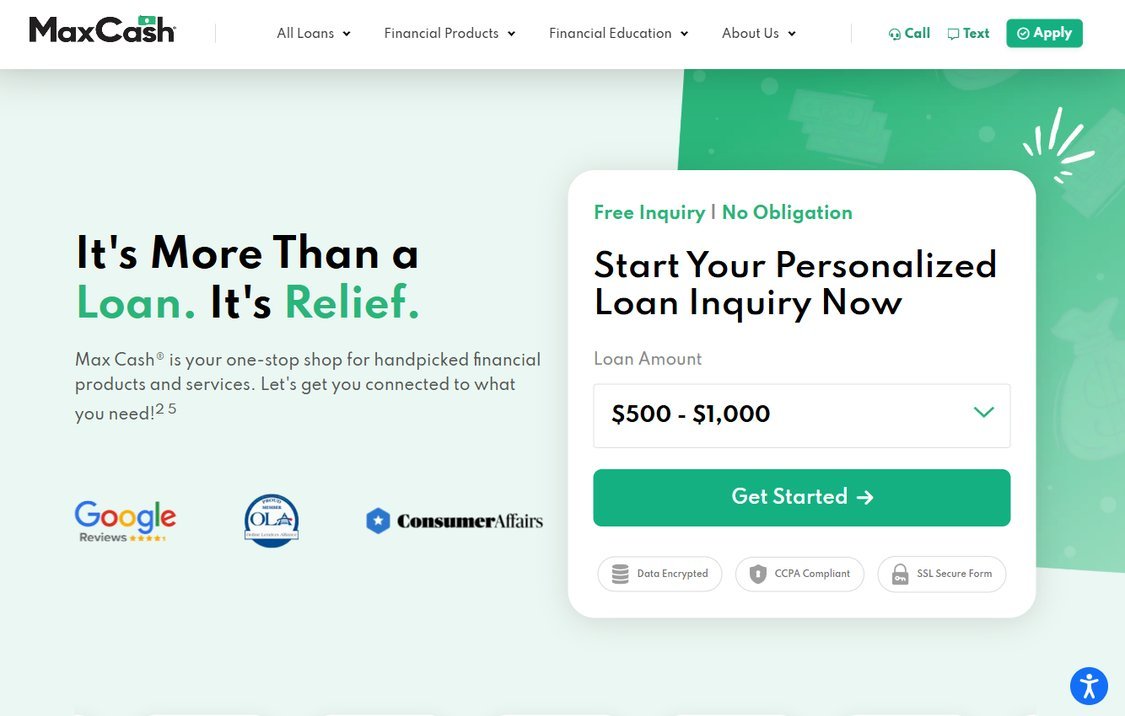
    When you are staring at a sudden bill and the clock is ticking, Max Cash steps into the ring. They specialize in speed, offering installment loans and even title loans in a matter of minutes. This is clearly designed for the “emergency” scenario where every second counts—think a sudden transmission failure in your car that prevents you from getting to work, or an urgent medical procedure that requires a deposit.

    Their loan amounts are highly segmented, starting as low as $250. This makes them an excellent option for those who don’t want to take on more debt than absolutely necessary. If you only need $300 to cover a utility bill, taking out a $5,000 loan is a recipe for disaster. Max Cash allows for surgical precision in borrowing. They provide a “relief” focused service for those in urgent financial straits who need liquidity immediately without the bureaucracy of a major bank.

    Pros:

    • Extremely fast processing for emergency needs.
    • Very low entry point for small loans ($250).
    • Wide range of products including title loans.

    Cons:

    • High-speed, small-dollar loans often carry very high interest rates.

    5. Upgrade

    Upgrade – upgrade.com

    Upgrade is more than just a lender; they are a full-scale financial services provider. They offer personal loans, credit cards, and even checking accounts. This makes them a great “one-stop shop” for someone looking to consolidate their financial life into one ecosystem. By bringing multiple financial products under one roof, you can often find more streamlined management of your overall cash flow.

    With a maximum loan amount of $50,000, they are suitable for significant life changes like business ventures or large purchases. Their model is built around helping customers earn rewards and manage their cash flow more effectively through their various products. They often use a combination of credit scores and income verification to determine eligibility, which can be a benefit for those who have a high income but a lower credit score due to past mishaps.

    Pros:

    • Comprehensive suite of products including checking accounts.
    • High loan limits up to $50,000.
    • Offers cash back incentives on certain products.

    Cons:

    • May require a more stable financial profile than specialized sub-600 lenders.

    6. LendingPoint

    LendingPoint – lendingpoint.com

    LendingPoint focuses on helping users unlock possibilities through personalized personal loans. They offer amounts ranging from $1,000 to $36,500, making them a middle-ground option for those who need more than a quick cash advance but less than a major bank loan. They target consumers who are looking for a way to bridge the gap between being “unbankable” and having a standard prime credit score.

    Their application process is designed to be efficient, allowing you to check your rate without impacting your credit score. This is a massive advantage for someone with a sub-600 score who cannot afford to lose any more points to hard inquiries. Every time you apply for credit and are denied, it leaves a mark on your report. LendingPoint’s “soft pull” feature allows you to shop for terms with confidence and zero risk to your credit standing.

    Pros:

    • Check rates without affecting your credit score.
    • Significant loan amounts up to $36,500.
    • Clear purposes for loans like medical or travel expenses.

    Cons:

    • Credit requirements are not explicitly stated as “low credit” friendly.

    Understanding the True Cost of Sub-600 Borrowing

    When your credit is below 600, you aren’t just paying for the money you borrow; you are paying for the risk the lender is taking. It is essential to understand the concept of Annual Percentage Rate (APR). While a standard bank loan might have an APR of 8% to 12%, a sub-600 lender might offer rates ranging from 25% to 36% or even higher for short-term products. This difference can mean the difference between a manageable monthly payment and a debt cycle that is impossible to escape.

    Consider this comparison: borrowing $5,000 at 10% interest over 3 years results in much less total interest paid than borrowing $5,000 at 30% interest over 3 years. In the latter scenario, you could end up paying back nearly $8,000 for a $5,000 loan. Before signing any agreement, ask for a “Truth in Lending” disclosure. This document is legally required to show you exactly how much interest you will pay in total dollars over the life of the loan. If the total interest amount makes your eyes widen, look for a smaller loan amount or a different lender.

    Strategies to Improve Your Chances of Approval

    While you cannot instantly change a low credit score, you can change how you present yourself to a lender. Lenders look for stability. If you are applying for a loan with a 550 score, providing proof of consistent employment through the last six months of pay stubs can be more influential than the score itself. Stability suggests a lower risk of default, which is the primary concern for any lender.

    Another powerful strategy is the “pre-qualification” phase. Never, under any circumstances, submit a full application until you have used a pre-qualification tool. As mentioned earlier, a “hard inquiry” happens when you officially apply for credit and can drop your score by several points. A “soft inquiry” happens when you check your rate or use a comparison tool. You should perform several soft inquiries to find the best rate, and only once you have found a lender that meets your needs should you proceed to the formal application. This methodical approach protects your credit score while you hunt for the most affordable capital.

    Additionally, always read the fine print regarding repayment terms. Some lenders might offer a low monthly payment, but if that term is stretched over several years, you will end up paying back double or triple what you originally borrowed. Aim for the shortest term you can realistically afford to minimize the total interest paid. If you can afford to pay an extra $50 toward your principal each month, you can drastically reduce the total cost of the loan and the time you spend in debt.

  • Best Lenders for a 620 Credit Score Personal Loan in 2026

    620 credit score personal loan

    Best Lenders for a 620 Credit Score Personal Loan in 2026

    Last updated: 2026-10-16

    Trying to manage money with a 620 credit score often feels like driving through a heavy fog. You know you can pay your bills on time, but big banks tend to look the other way when they see a “fair” rating on your report. It is a frustrating spot to be stuck in. You are caught between high-interest traps and the strict rules of premium lenders.

    When looking for a lifeline, you shouldn’t just settle for anyone who says yes. The real goal is finding a lender that offers a way forward without burying you under predatory interest rates. This list looks at the top contenders for 2026 for anyone sitting at that 620 threshold, focusing on how fast they move and how transparent they are.

    1. JetzLoan
    2. Max Cash
    3. Avant
    4. Upgrade
    5. LendingPoint
    6. United Finance
    7. Prosper

    Evaluating Fair Credit Loan Options

    To figure out which lenders actually cater to people with fair credit, we looked at a few specific things. We tracked how quickly a borrower can go from an initial inquiry to having actual cash in their hand. Life’s emergencies don’t wait for a week-long underwriting process, so speed matters.

    Checking rates without a hard inquiry is another big deal. A 620 score is a delicate thing, and every unnecessary hard pull can nudge that number down a few points. We prioritized lenders that offer a “soft” look at your credit, so you can shop around without hurting your score immediately.

    The math is simple. If a lender takes too long or requires a hard pull just to give you a quote, they might not be the right fit for someone trying to protect a borderline score. You want options that let you compare costs without any immediate penalty.

    Lender Name Loan Amount Range Funding Speed Credit Impact Check
    JetzLoan $500 – $35,000 As little as 24 hours No hard credit pull
    Max Cash $250 – $10,000+ Minutes Free inquiry
    Avant See site See site See site
    Upgrade Up to $50,000 Fast funding Won’t impact score
    LendingPoint $1,000 – $36,500 See site Does not impact credit score
    United Finance Up to $20,000 Quick approval See site
    Prosper $2,000 – $50,000 See site No impact to credit

    Ranking of Top Lenders

    1. JetzLoan

    JetzLoan – jetzloan.com

    JetzLoan is a go-to for people who need cash yesterday. They connect borrowers with various top personal loan lenders, which cuts out the exhausting search for a match. It is a digital-first setup built for a fast-paced world where waiting days for a response isn’t an option. (jetzloan.com)

    This service works well if you need to consolidate debt or cover a sudden car repair. You can receive funds within a 24-hour window, making it a strong choice for urgent needs. The application is lean, taking only about two minutes to get things moving.

    It is not a direct lender, so keep that in mind. They act as a middleman to find you the best fit from their network rather than being the sole source of the money.

    Pros:
    • Funds can be deposited in as little as 24 hours.
    • No hard credit pull during the initial rate check.
    • High maximum loan limit of $35,000.
    Cons:
    • Connects to other lenders rather than being the sole source.

    2. Max Cash

    Max Cash – maxcash.com

    Max Cash is a versatile shop for many different financial products. Whether you need a small installment loan or a larger cash advance, their platform is built to find relief quickly. They handle everything from tiny emergency loans to car financing.

    The platform is very accessible. You can find anything from a $250 amount to significant sums over $10,000. Since they offer free, no-obligation inquiries, you can look around without worrying about a sudden dip in your credit score. It is a great tool when you are in a pinch.

    Just be aware that the variety of products can feel a bit overwhelming. There are a lot of moving parts to keep track of when you are browsing their options.

    Pros:
    • Extremely low entry point starting at $250.
    • Very fast processing time, often within minutes.
    • Wide range of products including title loans and cash advances.
    Cons:
    • The variety of products can be overwhelming and complex.

    3. Avant

    Avant – avant.com

    Avant focuses on helping people move their financial lives forward. They specialize in things like debt consolidation and emergency loans for those who might not fit the mold of a traditional bank. Their goal is to help you reach specific milestones through structured installment loans.

    This lender is a solid pick if your score is in the 580 to 700 range. They offer a sense of stability, aiming to provide clarity instead of just a quick transaction. It is a more holistic approach for the middle-ground borrower.

    They aren’t quite as loose as some niche “bad credit” lenders. You might find that their requirements are a bit more specific than others in the market.

    Pros:
    • Specific loan products for debt consolidation and home improvement.
    • Designed for borrowers in the 580-700 credit score range.
    • Focuses on long-term financial movement.
    Cons:
    • May have stricter requirements than niche “bad credit” lenders.

    4. Upgrade

    Upgrade – upgrade.com

    Upgrade is a heavy hitter in the online world. They offer a whole suite of services, including personal loans, credit cards, and savings accounts. They are well-known for being fast and offering fixed rates, which helps when you are trying to budget for the future.

    If you need to borrow up to $50,000, Upgrade offers a very direct path to funding. Their system shows you your rate in minutes without hurting your credit score. They even have perks like cash back on certain debit purchases for their checking customers.

    Because they have so many different products, the sheer number of options can sometimes get confusing. You might want to take a moment to figure out exactly which tool fits your situation best.

    Pros:
    • High loan ceilings reaching up to $50,000.
    • Fixed rates provide predictable monthly payments.
    • Fast funding and quick rate checks.
    Cons:
    • Complexity of multiple products might be confusing.

    5. LendingPoint

    LendingPoint – lendingpoint.com

    LendingPoint makes the money side of things simple with a straightforward application. They target people who need to cover urgent expenses, like medical bills, a wedding, or travel costs. Their range is substantial, offering loans from $1,000 up to $36,500.

    They emphasize being transparent. You can check your rates without impacting your credit score, which is vital if you have a 620 score and need to be careful with your credit health. It makes navigating a large purchase much less stressful.

    Just be prepared for the paperwork. The application process might require you to provide more detailed documentation than some of the faster, lighter lenders.

    Pros:
    • Loan amounts are tailored for significant life events.
    • Soft credit checks allow for safe rate comparison.
    • Clear distinction for various loan purposes.
    Cons:
    • The application process may require more detailed documentation.

    6. United Finance

    United Finance – unitedfinance.com

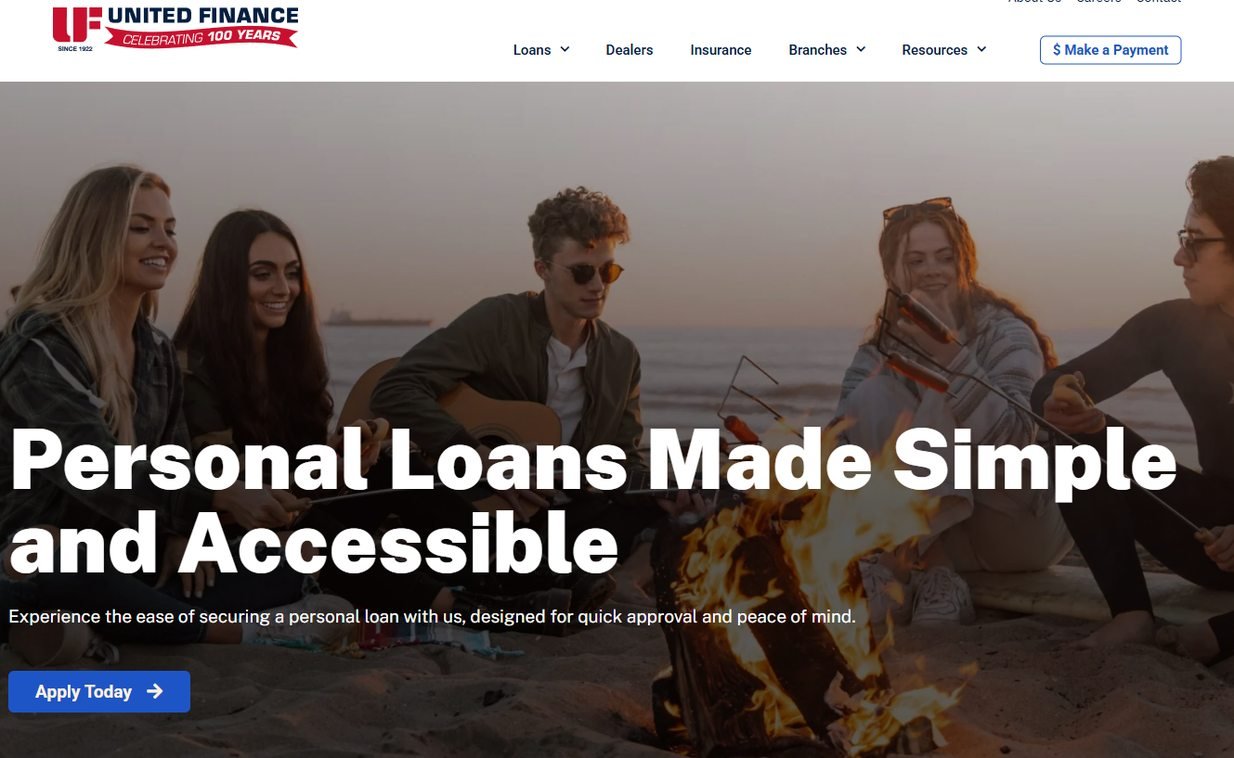
    United Finance has been around since 1922. That kind of longevity provides a level of stability that many new fintech companies simply cannot match. They offer a more traditional, personalized experience, focusing on personal and auto loans that fit a specific budget.

    For those looking to build or rebuild credit, they offer a strategic way to manage debt through installment loans. You get a sense of peace of mind working with dedicated, friendly lenders. It is a great option if you prefer a more human touch in your banking.

    They might not have the instant, high-tech speed of the newer apps, but they have the experience to back it up. It is a trade-off between cutting-edge speed and old-school reliability.

    Pros:
    • Decades of experience and stability in the market.
    • Offers both personal and auto loan options.
    • Focuses on building a sustainable budget.
    Cons:
    • May lack the instant, high-tech speed of newer competitors.

    7. Prosper

    Prosper – prosper.com

    Prosper is a big name in the peer-to-peer lending space. They are known for competitive rates and a strong market presence. They offer personal loans from $2,000 to $50,000, often with flexible repayment terms.

    They are a strong choice if you want to see your rates quickly without any credit impact. The platform is built for efficiency, making it easy to find the funds you need when you need them most. It is a very modern, tech-savvy way to handle debt.

    Since it is a peer-to-peer model, the approval process can sometimes feel different than a traditional bank. There are different nuances to how they evaluate your application.

    Pros:
    • High loan limits up to $50,000.
    • Offers a variety of terms, including 6-year options.
    • Quick and easy digital interface.
    Cons:
    • Peer-to-peer models can sometimes have different approval nuances.

    Navigating Your Loan Search

    Picking the right lender is a balancing act. You have to weigh your immediate needs against your long-term financial health. If there is an emergency, speed is your main driver. If you are consolidating debt, you need to look very closely at the total cost and the interest rate.

    Don’t fall into the trap of only looking at the monthly payment. A lower monthly payment usually means a much longer loan term. This can result in you paying thousands of dollars more in interest over the life of the loan. Always ask for the total repayment amount before you sign anything.

    Another mistake is applying for multiple loans at once. While checking your rate is usually safe, submitting a full application triggers a “hard” pull. Do your research, compare the rates using the “soft pull” options first, and only commit when you find the best fit.

  • Top 6 Lenders for a 500 Credit Score Personal Loan in 2026

    500 credit score personal loan

    Top 6 Lenders for a 500 Credit Score Personal Loan in 2026

    Last updated: 2026-10-16

    Walking through a financial slump with a 500 credit score feels like trying to find your way through a thick fog without a compass. Many people assume a low score is a locked door, but the current market suggests it is often just a hurdle. Finding a lender that looks past a single number is the key to finding relief.

    A 500 score typically falls into the “very poor” category. This means traditional mortgage lenders or high-tier credit card issuers will likely issue immediate denials. However, you are not entirely shut out of the credit market. You simply must shift your strategy from “standard” lenders to “specialty” lenders.

    When searching for a loan, the goal isn’t just to get the cash. You need to secure terms that won’t sink your future. High interest rates can turn a small debt into a mountain of trouble. For example, a $5,000 loan at a 25% APR is vastly different from a $5,000 loan at 36% APR when viewed over a 36-month repayment period. The latter can result in thousands of dollars in additional interest that could have gone toward your savings or debt reduction. This selection focuses on lenders that prioritize accessibility and speed for those working to rebuild their financial standing.

    1. Avant
    2. OneMain Financial
    3. FastLendGo
    4. Reprise
    5. United Finance
    6. OppLoans

    How These Lenders Were Evaluated

    The comparison process focused on accessibility for borrowers in the “poor” credit range. Since a 500 score often limits access to traditional bank loans, the evaluation looked heavily at lenders known for catering to weak credit profiles. We prioritized companies that offer clear paths to application without immediately penalizing your FICO score during the initial inquiry.

    A “soft pull” allows you to see your potential rate and terms without a “hard pull” hitting your report. This is vital when your score is already under pressure. You can check your options without making the situation worse.

    Speed of funding and transparency in terms were the next critical pillars. A borrower in an emergency situation—facing an unexpected car repair, a medical bill, or an urgent utility payment—needs money yesterday. Therefore, lenders that offer quick decision-making or same-day funding were given higher visibility in this ranking, provided they maintained reasonable structures for repayment. We specifically looked at the “time-to-cash” metric, which measures the duration from the moment you hit “submit” on an application to the moment the funds are available in your checking account.

    Understanding the True Cost of Low-Credit Loans

    Before committing to a lender from this list, it is essential to understand the mathematical reality of high-interest borrowing. When you have a 500 credit score, lenders view you as a high-risk borrower. To compensate for that risk, they charge higher Annual Percentage Rates (APRs). It is vital to distinguish between the interest rate and the APR. The APR includes the interest rate plus any lender fees or origination costs, providing a more accurate picture of what you will actually pay.

    Consider the following comparison of loan scenarios for a borrower with a 500 score:

    Loan Amount Interest Rate (APR) Term Length Monthly Payment Total Interest Paid
    $3,000 15% (Good Credit) 24 Months $145.46 $491.04
    $3,000 30% (Fair Credit) 24 Months $171.18 $1,108.32
    $3,000 45% (Poor Credit) 24 Months $199.63 $1,791.12

    As shown above, doubling the interest rate can more than triple the total cost of the loan. This is why selecting a lender that helps you rebuild your credit—rather than one that simply extracts maximum interest—is the most important decision you will make in this process.

    Comparison of Leading Lenders

    Lender Name Loan Amounts Terms Funding Speed Credit Requirement
    Avant See site See site See site Weak Credit Friendly
    OneMain Financial $1,500 – $30,000 24 – 60 months As soon as 1 hour See site
    FastLendGo See site See site See site Bad Credit/No Credit
    Reprise See site See site See site See site
    United Finance Up to $20,000 See site See site See site
    OppLoans See site See site Same-day funding Does not affect FICO

    Ranking of Top Lenders

    1. Avant

    Avant – avant.com

    Avant positions itself as a partner for those looking to move forward financially. They offer specialized solutions, including credit cards and installment loans, designed to fit various life stages. Their focus is on providing tools that help users manage debt or handle unexpected expenses.

    Unlike many predatory lenders that only offer short-term “payday” style loans, Avant aims to build a long-term relationship with the borrower. This lender is a strong choice for individuals who need more than just a simple loan. Their ecosystem of products, including debt consolidation options, makes them a versatile player for those looking to reorganize their financial life.

    If you are currently juggling multiple high-interest credit card balances, an Avant installment loan could potentially consolidate those payments into a single, more manageable monthly bill, provided the interest rate is favorable.

    Pros:
    • Offers diverse financial tools like credit cards and debt consolidation.
    • Designed to help users move toward financial goals.
    • Flexible solutions for different life stages.
    Cons:
    • Specific interest rates and terms are not explicitly listed for all credit tiers.

    2. OneMain Financial

    OneMain Financial – onemainfinancial.com

    OneMain Financial is a powerhouse for those who need a human touch. With over 1,300 branches, they offer a physical presence that many online lenders lack. This is a significant advantage for borrowers who may have complex financial situations—such as being self-employed or having unconventional income sources—that a computer algorithm might struggle to verify.

    In a branch setting, you can sit down with a loan officer to explain your situation. This can sometimes lead to better terms than a purely automated process. They provide personal loans ranging from $1,500 to $30,000, making them a robust option for larger needs such as home repairs or debt consolidation.

    If you need funds quickly, they can provide money as soon as one hour after the loan is signed. You just have to complete the necessary paperwork and verification in person.

    Pros:
    • Large network of physical branches for in-person support.
    • Fast funding, potentially within one hour of signing.
    • High loan amounts up to $30,000.
    Cons:
    • Requires a response to a mailed offer or specific branch visit for some options.

    3. FastLendGo

    FastLendGo – fastlendgo.com

    FastLendGo acts as a digital bridge, helping borrowers quickly compare local personal loan options. Instead of you spending hours calling different banks, FastLendGo aggregates various offers into a single streamlined platform. They cater to a wide variety of needs, from small $500 loans for emergency repairs to larger amounts for auto or roof repairs.

    Their platform is built for speed and ease of use. It is optimized for mobile users who need to apply on the go. They specifically target those in tough spots, offering solutions for bad credit and even those with no credit history. This makes them a go-to for those who need to find a lender “near me” without the traditional wait times associated with brick-and-mortar institutions.

    By using a comparison model, you are empowered to see which lender offers the most competitive rate for your specific credit profile. You get to see the whole picture at once.

    Pros:
    • Covers a wide range of loan purposes like auto and dental.
    • Options available for various credit levels, including no credit.
    • Quick comparison of local options.
    Cons:
    • The platform serves as a comparison tool, meaning terms depend on the specific lender matched.

    4. Reprise

    Reprise – reprise.com

    Reprise stands out by leveraging high-tech AI tools to manage demos and data. While their primary focus is on an enterprise demo creation platform, they represent the intersection of advanced technology and professional service. In an era where financial services are increasingly being automated, Reprise serves as a reminder of how sophisticated data management has become across all sectors.

    For the tech-savvy professional, they offer capabilities like data injection and full clones. They are less a traditional personal lender and more a specialized tool for high-level business presentation and management. This makes them a unique entry in a list that otherwise focuses on consumer financing, highlighting the diverse landscape of modern fintech.

    Pros:
    • Advanced AI toolset for demo creation.
    • High-level data injection capabilities.
    • Efficient for professional presentation management.
    Cons:
    • Not a traditional consumer personal loan provider for individual debt.

    5. United Finance

    United Finance – unitedfinance.com

    United Finance is a seasoned veteran, having been around since 1922. They specialize in personal and auto loans that are designed to be simple and accessible. Their reputation is built on decades of providing stability to their clients. This is a refreshing change in a market often dominated by “flashy” but unstable fintech startups.

    Their longevity suggests a deep understanding of the lending cycle and risk management. They offer personal loans up to $20,000. They also provide high-yield certificates for residents of Oregon. This dual focus on lending and savings/investment products makes them a solid choice for someone looking for a traditional, long-standing financial institution.

    Pros:
    • Extremely long-standing history and stability.
    • Offers both personal and auto loans.
    • Provides investment options like high-yield certificates.
    Cons:
    • Geographic limitations may apply to certain products like investment certificates.

    6. OppLoans

    OppLoans – opploans.com

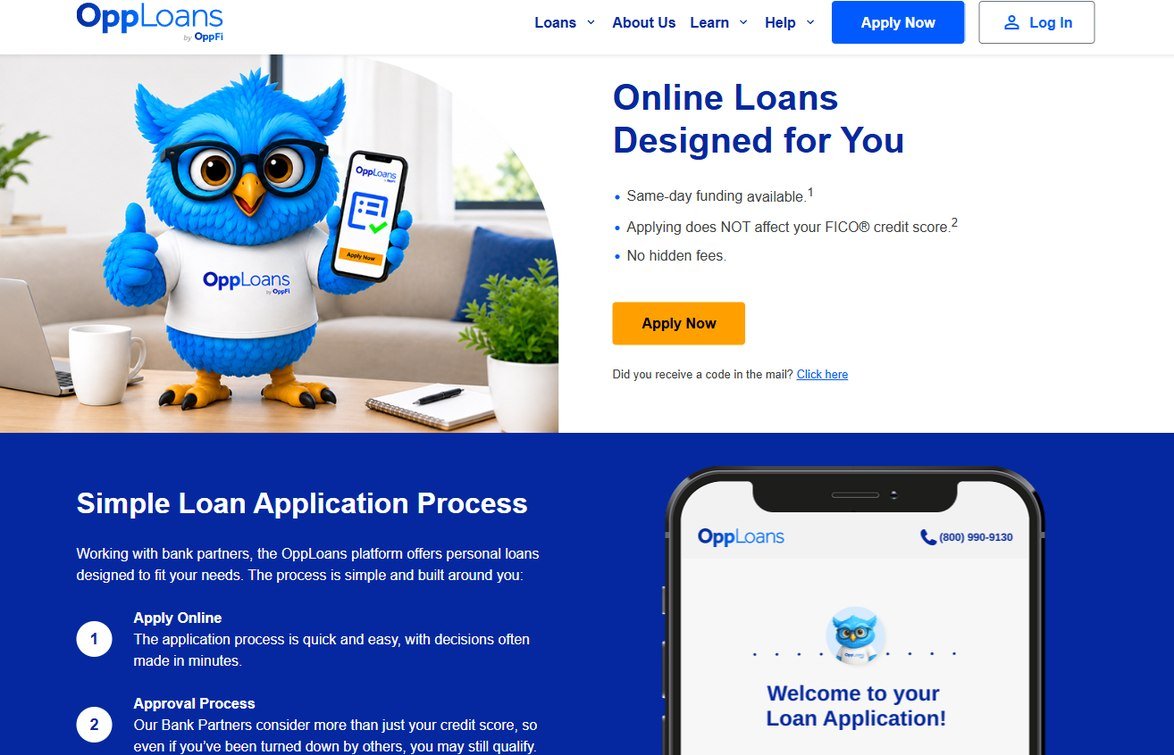
    OppLoans is built for speed and minimal impact on your credit score. One of their biggest selling points is that applying does not affect your FICO score. This is a godsend for someone trying to protect their 500 score. When you are in the process of rebuilding, every single point counts.

    A “hard inquiry” can drop a score by several points, so being able to check your eligibility without that penalty is a massive advantage. They work with bank partners to offer quick decisions. If you are in a pinch, they offer same-day funding. Their application process is streamlined, often providing decisions within minutes.

    This is ideal for urgent financial situations where a delay of even 24 hours could result in a late fee or a service disconnection. It is built for when you need a solution right now.

    Pros:
    • Applying does not affect FICO credit score.
    • Same-day funding available for approved applicants.
    • Quick decision-making process.
    Cons:
    • Typically aimed at high-need, short-term situations rather than long-term wealth building.

    Navigating Your Loan Search

    When you are staring at a 500 credit score, the temptation to grab the first offer is massive. However, the “easiest” loan isn’t always the best one. It is vital to read the fine print regarding the total cost of borrowing. A small loan that feels easy to get can become a heavy burden if the interest rates are predatory.

    Always check for “origination fees”—these are upfront costs taken out of your loan amount. For example, if you borrow $1,000 but the lender takes a $100 origination fee, you only receive $900. However, you still owe interest on the full $1,000. That is a hidden cost that can sting later.

    One common mistake is ignoring the difference between a hard and soft credit pull. Always look for lenders that allow you to check your eligibility without a hard inquiry. This allows you to shop around and compare rates without further damaging your score. Use this period to gather multiple quotes. Even if they are from different lenders, comparing the APRs is the only way to ensure you aren’t overpaying for the privilege of borrowing.

    Another pitfall is failing to consider the repayment timeline. A shorter term means higher monthly payments, while a longer term means more interest paid over the life of the loan. If you choose a 60-month term just to make the monthly payment affordable, you might end up paying back nearly double the amount you originally borrowed. Always pick a term that fits your monthly budget comfortably. Leave enough room to build savings and improve that score for the future. The ultimate goal is to use this loan to bridge a gap, not to create a permanent cycle of debt.

  • Top 6 Lenders for a 520 Credit Score Personal Loan in 2026

    520 credit score personal loan

    Top 6 Lenders for a 520 Credit Score Personal Loan in 2026

    Last updated: 2026-10-16

    Hitting a 520 credit score feels like trying to run a marathon through waist-deep mud. The financial world often slams doors in your face when your number dips into the low 500s. It is an exhausting cycle of searching for help only to find more rejection letters in the mail.

    At this level, you are likely dealing with a history of missed payments, high credit utilization, or perhaps a recent bankruptcy or collections account. The psychological toll of being told “no” by every major institution can be just as heavy as the financial burden itself.

    This ranking focuses on lenders that actually look beyond that single, stubborn number. When you are staring at a low score, you need speed, clarity, and a realistic chance at approval. You don’t have time for a three-week manual review process when an emergency repair or a medical bill is due tomorrow.

    We have sifted through the noise to find who offers real relief for those in a tight spot. We prioritized lenders that utilize alternative data points, like your income history or banking relationships, to determine your creditworthiness.

    1. Max Cash
    2. Avant
    3. JetzLoan
    4. Acorn Finance
    5. NetCredit
    6. Upgrade

    How These Lenders Were Evaluated

    The selection process prioritized accessibility for borrowers with significant credit challenges. A 520 score is a tough climb. Our primary metric was whether the lender offers a path to approval without requiring a perfect history. We looked for services that prioritize speed and ease of application.

    We focused specifically on digital-first platforms that can process an application in under ten minutes. Beyond just the score, we assessed the variety of loan products available. Whether you need a small cash injection to cover an unexpected utility bill or a larger sum for home improvements, the lender must provide options.

    We also checked for features like “no credit impact” inquiries. This ensures you don’t sink your score further by performing “shotgunning,” which is the practice of applying to dozens of lenders at once in a desperate attempt to find a “yes.”

    Finally, we evaluated the transparency of their fee structures. For a borrower with a 520 score, unexpected origination fees or prepayment penalties can be the difference between staying afloat and falling deeper into a debt spiral. We sought out lenders that are upfront about their APRs before you commit to a formal application.

    Lender Name Loan Amounts Funding Speed Credit Impact for Quotes
    Max Cash $250 – $10,000+ Minutes No Obligation
    Avant See site See site See site
    JetzLoan $500 – $35,000 As little as 24 hours No impact
    Acorn Finance See site See site No impact
    NetCredit Up to $10,000 Same-day available No impact
    Upgrade Up to $50,000 Fast funding Won’t impact score

    The Best Lenders for Low Credit Scores

    1. Max Cash

    Max Cash – maxcash.com

    Max Cash acts as a bridge when the traditional banks turn their backs. They specialize in a wide variety of products, ranging from small personal loans to more substantial installment loans. If you are in a pinch, they aim to provide relief in minutes rather than days.

    This is particularly useful for “bridge financing,” where you need cash to cover a gap between two financial events, such as receiving a tax refund or a paycheck. It is a strong choice for those who need immediate liquidity to handle emergencies.

    They offer a massive range of loan amounts, starting as low as $250 and going well above $10,000. It is a versatile option for someone whose financial situation requires quick, flexible movement. Because the entry point is so low, it is an excellent tool for micro-needs that don’t justify a large, long-term debt commitment.

    Pros:

    • Extensive range of loan amounts from $250 to over $10,000.
    • Fast processing time measured in minutes.
    • No obligation for the initial personalized inquiry.

    Cons:

    • Focuses heavily on high-speed relief which can lead to higher interest costs.

    2. Avant

    Avant – avant.com

    Avant understands that a single number doesn’t tell your whole story. They aim to move people forward financially, offering tools that help you manage debt or handle unexpected household expenses. They are a structured option for those looking to build a more stable foundation.

    Unlike some lenders that only look at FICO, Avant’s underwriting may consider your relationship with your bank or your steady employment history. Whether you are looking for a credit card or a specific loan for home improvement, they offer various solutions.

    They are particularly useful for those who have moved slightly past the absolute bottom of the credit scale and need a reliable partner for long-term goals. If your score is climbing from 520 toward 600, Avant can be a partner in that upward trajectory rather than just a temporary fix.

    Pros:

    • Offers diverse products including credit cards and debt consolidation.
    • Designed to help users move forward financially.
    • Flexible solutions for different life stages.

    Cons:

    • Minimum credit score requirements may exclude the very lowest scores.

    3. JetzLoan

    JetzLoan – jetzloan.com

    If you are tired of waiting for a check to clear, JetzLoan is a breath of fresh air. They connect you with top lenders in a matter of minutes, making the comparison process incredibly efficient. It is a streamlined approach for the modern, busy borrower.

    Instead of you spending hours filling out dozens of different forms, JetzLoan’s marketplace model does the heavy lifting for you. They boast a high customer rating and have funded over 500,000 loans. With the potential to receive funds in as little as 24 hours, they are built for speed.

    The ability to check rates without a hard credit pull is a massive safety net for your score. This is critical because if you are already at a 520, even a few unnecessary hard inquiries can drop you into the high 400s, making you even less attractive to future lenders.

    Pros:

    • Extremely fast 24-hour funding potential.
    • No hard credit pull required to check rates.
    • High customer satisfaction rating.

    Cons:

    • The speed of funding depends heavily on the specific lender you are matched with.

    4. Acorn Finance

    Acorn Finance – acornfinance.com

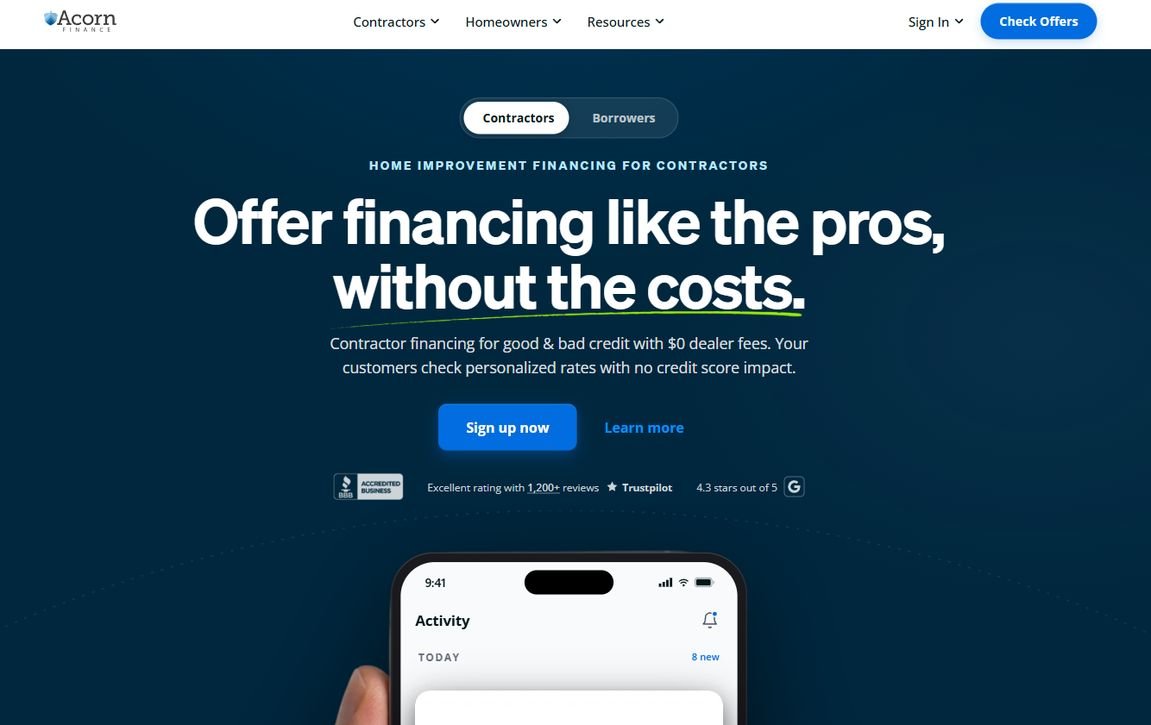
    Acorn Finance is a specialized player, specifically targeting those who need financing for home improvement projects. They act as a marketplace, connecting you with various lenders. This is particularly helpful if you are trying to fix up a kitchen or a deck to increase home value.

    For many, home equity is their greatest asset, and using a loan to improve that asset is a strategic way to build long-term wealth even when credit is currently low. They offer a unique service where contractors can offer financing with zero dealer fees.

    This makes them a standout for larger, project-based needs. You can check personalized rates without any impact on your credit score, which is vital when your score is already shaky. For example, if you need a new roof, you can compare several specialized home improvement lenders through Acorn to see who offers the most competitive APR for your specific profile.

    Pros:

    • Specialized in home improvement contractor financing.
    • No credit score impact when checking rates.
    • Zero dealer fees for some contractor options.

    Cons:

    • More niche in focus, which may not suit general personal cash needs.

    5. NetCredit

    NetCredit – netcredit.com

    NetCredit markets itself as “Credit to the People,” emphasizing that you are more than just a number in a database. This philosophy is reflected in their use of advanced algorithms to look at a broader picture of your financial health beyond just the FICO score.

    They might look at your ability to pay through your banking activity, which is a game-changer for those with thin credit files or recent score dips. They offer personal loans and lines of credit with the potential for same-day funding.

    This is ideal for someone who needs to act immediately on a pressing financial obligation, like a sudden car repair that is preventing you from getting to work. They aim to provide a trustworthy and transparent experience for those often ignored by big banks, offering a more empathetic approach to the lending process.

    Pros:

    • Same-day funding is an available option.
    • Uses advanced algorithms to look beyond the credit score.
    • Checking eligibility does not affect your FICO score.

    Cons:

    • Loan amounts are capped at a relatively modest $10,000.

    6. Upgrade

    Upgrade – upgrade.com

    Upgrade is a heavy hitter in the personal loan space, catering to a massive customer base. They offer significant loan amounts, up to $50,000, which is excellent for major life events or consolidating high-interest debt. If you are carrying several high-interest credit card balances that are dragging your score down, this could be your exit strategy.

    Using an Upgrade loan to consolidate that debt into a single, lower-interest installment loan can be a powerful way to jumpstart your credit recovery. Their platform is designed for speed and convenience, allowing you to see rates in minutes.

    They also provide features like cash back on certain purchases, which can help you claw back some financial ground while you work on improving your credit standing. This dual-purpose approach—providing a loan while also offering tools to manage cash flow—makes them a comprehensive financial partner.

    Pros:

    • High loan limits up to $50,000.
    • Fast funding and quick rate checking.
    • Additional financial tools like cash-back checking accounts.

    Cons:

    • The focus on diverse financial products can be overwhelming if you only need a simple loan.

    The Costs of Low-Credit Borrowing

    When your score is in the 520 range, you must be prepared for the reality that borrowing will be more expensive than it is for someone with a 750 score. Interest rates are essentially a “risk premium” that lenders charge to compensate for the possibility that you might not pay them back. It is vital to understand the difference between a simple interest loan and a compound interest loan.

    Simple interest is calculated only on the principal amount. Compound interest is calculated on the principal plus any accumulated interest, which can cause your debt to snowball if you only make the minimum payments. Furthermore, you should always look for the “Total Cost of Loan” figure. A lender might advertise a monthly payment of $150, which sounds manageable, but if that loan is spread over 60 months, you might end up paying back $9,000 for a $5,000 loan.

    That is a $4,000 cost for the privilege of borrowing. Always ask: “How much total interest will I pay over the life of this loan?” This single question can save you thousands of dollars and prevent years of financial struggle.

    Strategies to Raise Your Score After Taking a Loan

    Taking a loan with a 520 score should be viewed as a tactical move to improve your financial standing, not just a way to cover a current bill. If you use a loan to consolidate debt, your goal is to use that breathing room to pay off the underlying balances and then leave those credit cards alone. If you pay off a credit card with a personal loan but then immediately run the credit card balance back up, you have effectively doubled your debt and will likely see your score plummet even further.

    To maximize the impact of your loan on your credit score, follow these three steps:

    • Automate your payments: A single missed payment can drop a score by 50-100 points. Set up autopay for at least the minimum amount to ensure you never miss a deadline.
    • Maintain a low utilization ratio: If the loan was used to pay down credit cards, keep those cards at less than 30% utilization. This is one of the fastest ways to see a score increase.
    • Avoid new debt for 6-12 months: Once you have stabilized your situation, resist the urge to open new lines of credit. Your score needs time to reflect the stability of your current repayment behavior.

    Navigating the Loan Process

    When you are working with a 520 score, every move counts. One of the biggest mistakes is applying for multiple loans at once. Each “hard pull” can shave points off your score, making your situation even more precarious. Always look for lenders that allow you to check rates with a “soft pull” or no impact on your credit score. This allows you to window shop for the best rates without the penalty of multiple inquiries.

    It is also vital to read the fine print regarding repayment terms. A quick loan might solve a problem today, but if the interest rates are astronomical, it could create a mountain of debt tomorrow. Always compare the total cost of the loan, not just the monthly payment, to ensure you are making a choice that actually helps you move forward.

    Look specifically for “prepayment penalties”—if you come into a windfall and want to pay the loan off early to save on interest, some lenders will charge you a fee for doing so. You want a lender that rewards you for being responsible, not one that penalizes you for being efficient.

  • Top 5 Best Personal Loans for a 550 Credit Score in 2026

    550 credit score personal loan

    Top 5 Best Personal Loans for a 550 Credit Score in 2026

    Last updated: 2026-10-16

    Trying to manage money with a 550 credit score often feels like walking through waist-deep mud. It is a tough spot to be in, especially when life throws a sudden curveball your way. An unexpected car repair, an urgent dental bill, or a surprise medical cost can arrive exactly when your bank account is at its lowest.

    Traditional banks might slam the door shut, treating a 550 score as an automatic disqualifier. However, several specialized lenders stay open for business. These companies use their own scoring models that look past your FICO number. They check your income stability, employment history, and even your banking relationships to see if you are a reliable borrower.

    Finding a lifeline requires more than just glancing at the interest rate. You have to weigh how fast you get the cash against the total cost of the debt. Some people need a low APR to keep long-term costs down. Others just need the money in their account within 24 hours to avoid an eviction notice or a late fee.

    This list highlights the most reliable options for anyone currently sitting in the fair to poor credit range. It provides a way to make sense of these high-stakes decisions when you need help quickly.

    1. LendingPoint
    2. FastLendGo
    3. Max Cash
    4. Avant
    5. Reprise

    How These Lenders Were Evaluated

    Evaluating lenders for low credit scores means looking past the marketing gloss. The main focus is accessibility and whether you can actually get funds despite a difficult credit history. It is not just about finding a company that says yes. It is about finding a company that offers a fair way to say yes.

    A lender might boast a high approval rate, but they aren’t a true lifeline if their terms include hidden service fees or predatory prepayment penalties. You need to know exactly what you are signing up for before you commit to the debt.

    Our selection process focused on lenders catering specifically to the 550 range. We looked at three main areas: accessibility, speed, and transparency. We checked how fast they deliver funds, how clear they are about loan amounts, and the variety of products they offer. Every entry was vetted to ensure they provide real pathways for immediate relief.

    We also tested the digital interfaces. If you are facing an emergency, you need to be able to complete the entire application from a smartphone while on the go. An interface that is hard to use can be a major roadblock when time is of the essence.

    Lender Name Loan Amounts Credit Requirements Funding Speed
    LendingPoint $1,000 – $36,500 Fair Credit Fast Funding
    FastLendGo $500 – $5,000+ Bad/Fair Credit Quick Access
    Max Cash $250 – $10,000+ Bad Credit In Minutes
    Avant See site 550 and above Fast Funding
    Reprise See site See site See site

    1. LendingPoint

    LendingPoint – lendingpoint.com

    LendingPoint helps people move from financial stress toward a bit more stability. They offer a wide range of loan amounts, making them a versatile choice. You might need a small amount for a medical bill or a much larger sum to consolidate debt.

    If you are carrying $15,000 in high-interest credit card debt, your monthly payments can start to spiral out of control. A single consolidation loan from LendingPoint can simplify everything into one predictable monthly payment. It is a way to stop chasing multiple due dates every month.

    This lender works well for people tackling specific burdens like home improvements or debt. Their digital experience is streamlined to respect your urgency. You can upload documents and get a decision in minutes, which is vital when you are managing a very tight budget.

    Pros:

    • High maximum loan ceiling up to $36,500.
    • No impact on credit score when checking rates.
    • Versatile loan purposes including wedding and travel.

    Cons:

    • May have stricter requirements than specialized bad credit lenders.

    2. FastLendGo

    FastLendGo – fastlendgo.com

    FastLendGo is built for the person who needs cash yesterday. They focus on quick access for needs like auto repairs or dental financing. If your car’s alternator fails and you need it fixed by Monday to keep your job, their specialized products are designed for that exact situation.

    They occupy the space between traditional banking and high-interest payday loans by providing structured personal loans. This gives you more stability than a short-term cash advance but more speed than a standard bank loan.

    Whether you need a $500 boost or a $5,000 loan, they offer various tiers. This flexibility matters when your score is in that tricky 550 zone. Instead of being forced into a massive loan you cannot afford, you can opt for a smaller amount that fits your immediate crisis.

    Pros:

    • Covers a wide range of specific emergencies like roof or motorcycle loans.
    • Offers very small loan amounts for immediate needs.
    • Provides options for high-income individuals and first-time borrowers.

    Cons:

    • The variety of products can be overwhelming for some.

    3. Max Cash

    Max Cash – maxcash.com

    Max Cash acts as a matching service to find you relief. For those struggling with a 550 score, they offer a way to find personalized lender matches. Their system connects you with what you actually need, which saves you from searching through dozens of different websites.

    Instead of a one-size-fits-all approach, they use an algorithm to find the lender most likely to approve your specific profile. It is about efficiency rather than just throwing a net into the water and hoping something sticks.

    They specialize in highly accessible amounts, starting as low as $250. This is perfect for micro-emergencies where a large loan would be overkill. If you have a $300 utility bill, taking out a $3,000 loan would be a mistake. Max Cash lets you solve the small problem without the heavy burden of excessive interest.

    Pros:

    • Extremely low entry point for loan amounts.
    • Fast inquiry process with no obligation.
    • Handles a wide variety of credit situations.

    Cons:

    • Focus on small amounts may not suit major debt restructuring.

    4. Avant

    Avant – avant.com

    Avant is a major player for anyone looking to move forward financially. They are known for considering applicants with scores as low as 550. This makes them a vital option if you have been told no by the big-name traditional banks.

    Unlike some lenders that only care about your FICO score, Avant looks at a broader view of your financial health. This can be a game-changer for people who have had recent setbacks but still maintain a steady income.

    The lender is geared toward long-term solutions like debt consolidation or home improvements. If you apply before their afternoon cutoff, you might see funds hit your account remarkably quickly. Their platform is designed for the modern consumer who wants to manage everything from a mobile app.

    Pros:

    • Specifically caters to the 550 credit score demographic.
    • Fast funding capabilities for approved applicants.
    • Offers both credit cards and loans for different needs.

    Cons:

    • Approval is heavily dependent on specific timing and criteria.

    5. Reprise

    Reprise – reprise.com

    Reprise operates in a different sphere, focusing on high-tech solutions and AI-driven tools. It is not a traditional consumer personal loan lender like the others. Instead, it represents the newer side of financial technology and data management.

    They are best suited for businesses or tech-forward entities looking for advanced demo creation and data injection. It is a specialized tool for those who need to present complex data in an interactive way, rather than a standard consumer seeking quick cash.

    For a fintech startup looking to demonstrate how a loan application process works to potential investors, Reprise offers the tools to build that interactive experience. It is about the technology behind the scenes rather than the consumer at the counter.

    Pros:

    • Highly advanced AI toolset for demo creation.
    • Efficient data injection and presentation capabilities.
    • Allows for easy sharing of product tours.

    Cons:

    • Not a traditional personal loan provider for individual consumers.

    Understanding the Cost of Borrowing: APR vs. Monthly Payment

    When you are in a financial bind, it is easy to fall into the trap of shopping only for the lowest monthly payment. You might see two loan offers: one with a $50 monthly payment and another with a $75 monthly payment. The $50 option looks like the winner because it leaves more money in your pocket today.

    However, this is a dangerous way to evaluate debt. The true cost is found in the Annual Percentage Rate (APR). A lender might offer a low monthly payment by stretching the term of the loan out over seven years. While your monthly obligation is lower, you could end up paying double or triple the amount you originally borrowed due to the interest.

    Always ask: “What is the total amount I will have paid back by the time this loan is finished?” If that number is significantly higher than the principal, you are paying a massive premium for the convenience of a lower monthly payment.

    The Impact of Hard vs. Soft Credit Inquiries

    A critical piece of knowledge for anyone with a 550 score is understanding how the application process affects your rating. There are two types of inquiries: soft pulls and hard pulls. A soft pull occurs when a lender checks your credit to see if you are pre-qualified. This happens when you use “check your rate” features.

    These inquiries do not show up on your credit report to other lenders and they do not lower your score. They are essentially a way to window shop without any penalty.

    A hard pull occurs when you officially submit an application for a loan or credit card. This signals to the credit bureaus that you are actively seeking new debt, which is seen as a risk factor. Each hard pull can cause a small, temporary dip in your score. If you are trying to repair your credit, you want to minimize these pulls.

    How to Choose and Avoiding Pitfalls

    Choosing a lender is a bit like picking a pair of shoes; if they don’t fit right, you’re going to have a painful journey. Always look at the total cost of the loan, not just the monthly payment. A low monthly payment might hide a massive interest rate that will drain your wallet over time.

    You should always request a truth-in-lending disclosure. This is a legal requirement that clearly outlines the total finance charge and the total amount you will eventually pay back. It takes the guesswork out of the equation.

    One of the biggest mistakes people make is applying for multiple loans all at once. This creates a “shotgun” effect where several hard inquiries hit your report in a short window. This makes you look desperate to creditors and can further tank your score. Instead, pick one or two lenders that match your specific need and focus there.

    Finally, read the fine print. Ensure you understand the repayment terms and check for prepayment penalties. Some lenders charge you a fee if you try to pay the loan off early. You don’t want to be stuck in a high-interest trap when you are finally ready to be debt-free. Use these lenders as a tool for recovery, but use them wisely.

    fastlendgo.com

  • Get a 100k Personal Loan Today

    100k personal loan

    Get a 100k Personal Loan Today

    Evaluating the Cost of a $100,000 Unsecured Loan

    Walking into a bank to ask for $100,000 feels like stepping into a high-stakes poker game. You might walk away with a winning hand, or you might find the dealer holding all the cards. The interest rates you eventually secure depend heavily on your credit profile. It acts as the ultimate gatekeeper to affordable capital.

    If your credit score is pristine, you might see APRs starting as low as 7%. This is the gold standard. For those with less-than-stellar credit, however, the numbers can quickly spiral. It is not uncommon to see rates climb toward 36% when lenders decide the risk of default is too high to ignore.

    Think of your credit score as a weather forecast for your wallet. A high score brings sunshine and low rates, while a lower score brings a storm of high interest. This gap can mean the difference between a manageable monthly bill and a financial nightmare that keeps you up at night.

    When comparing lenders, you’ll notice a massive divide. Traditional banks often demand a history of stability, whereas online lenders might offer speed at the cost of higher rates. Credit unions frequently provide a middle ground, offering competitive rates that feel a bit more human and less like a cold, calculated algorithm.

    The Monthly Burden and Term Lengths

    Time is a double-edged sword when you are staring down a $100,000 principal. Choosing a longer term might make your monthly payments look much more appetizing on paper. That extra time is exactly what allows interest to compound and eat away at your wealth like a slow-moving tide.

    Let’s look at the math. If you snag a rate around 9.49% APR, your monthly commitment remains relatively stable. But if you’re forced into a 36% APR territory, the numbers become quite staggering. It’s vital to run these numbers through a calculator before signing anything binding.

    Consider this breakdown for a $100,000 loan to see how the math shifts:

    Estimated APR Term Length Monthly Payment
    9.49% 3 Years $3,215
    9.49% 5 Years $2,100
    18% 5 Years $2,566
    36% 5 Years $3,450

    As the table shows, the difference between a 9.49% rate and a 36% rate over five years is nearly $900 every single month. That is money that could have gone toward a retirement fund or a down payment on a home. It is a steep price to pay for a high-interest loan.

    The Hidden Weight of Total Repayment

    The sticker price of a loan is rarely the actual price you pay. You must account for invisible costs, such as origination fees. These are often deducted from your principal upfront. This means you might receive less than the $100,000 you actually requested from the lender.

    If you are looking to find the best terms, you might want to explore specialized services like https://fastlendgo.com to see how different structures impact your bottom line. Always look closely at the fine print regarding any prepayment penalties. These can prevent you from paying the debt off early.

    Total cost of borrowing is the most important metric. A $100,000 loan at 10% over five years might cost you roughly $26,000 in total interest. That is a significant chunk of change. If the rate jumps to 25%, you are suddenly looking at an extra $40,000 in interest alone.

    Always ask your lender: “What is the total amount I will have paid by the time this is finished?” It is a simple question that provides a sobering reality check. Don’t let the monthly payment be the only number that guides your decision-making process.

    Comparing High-Limit Lenders and Loan Caps

    Chasing a six-figure sum is a different beast entirely compared to asking for a small quick fix. When you move into the $100,000 territory, you aren’t just a customer. You are a high-value asset. Lenders look at your profile with a magnifying glass, scrutinizing every detail of your financial history to decide if you are worth the risk.

    SoFi stands out in this arena. They are known for offering unsecured personal loans that can reach up to $100,000. This makes them a go-to option for people looking to consolidate massive amounts of debt or fund significant life changes without putting their home on the line.

    However, not every lender is ready to play in the big leagues. You will often find a middle ground where the stakes are lower but the accessibility is higher. These lenders act as the reliable workhorses of the financial industry, providing the necessary fuel for those who don’t quite need a massive windfall.

    Axos Bank is a prime example of this mid-range tier. They typically cater to borrowers looking for sums between $7,000 and $50,000. While they might not hand you $100,000 on a silver platter, their terms are often structured to be incredibly predictable and user-friendly for the average consumer.

    The Spectrum of Collateral and Risk

    One of the biggest forks in the road is deciding between unsecured and secured options. An unsecured loan is like a handshake deal backed by your reputation. You don’t have to put up your car or your house as collateral. This means your assets are safe if things go sideways. It is pure trust, albeit expensive trust.

    Secured loans, on the other hand, require you to put something on the table. Usually, this is an asset like a vehicle or a savings account. If you miss payments, the lender can take that asset. It is a safety net for the bank, which often results in much lower interest rates for the borrower.

    If you are looking for speed, the modern digital landscape is a lifesaver. Many lenders now offer fast online prequalification. This process uses a “soft credit pull,” which is like a window shopper looking at prices without actually buying anything. It won’t ding your credit score, allowing you to test the waters safely.

    You can peek at your potential terms without the fear of a damaged score. This is a game-changer for anyone who wants to shop around for the best deal. You can compare multiple offers from various institutions before ever committing to a hard inquiry that could impact your standing.

    The following table illustrates how different loan structures and amounts can impact your borrowing experience:

    Loan Type Maximum Amount Typical Term
    High-Limit Unsecured $100,000 Up to 7 Years
    Mid-Range Personal $50,000 3 to 6 Years
    Small Personal Loan $7,000 2 to 5 Years
    Secured Loan Variable Variable

    Flexibility in Repayment and Timing

    When you sign on the dotted line, the clock starts ticking immediately. Most lenders offer a variety of repayment terms, typically ranging from 3 to 6 years. Choosing a shorter term is like running a sprint. You’ll pay less in interest, but your monthly bills will be much steeper.

    Taking the longer route is more like a marathon. It keeps your monthly cash flow comfortable, giving you more breathing room for other expenses. You must remain vigilant, though. The longer you stretch that debt out, the more the total interest accumulates, potentially costing you thousands in the long run.

    It is vital to find the “sweet spot” where the monthly payment doesn’t break the bank, but the total interest doesn’t drain your future savings. Don’t just settle for the first offer that lands in your inbox. Take your time, run the math, and ensure the terms align with your long-term goals.

    Strategic Use Cases for Large-Scale Personal Financing

    Mastering Debt Consolidation

    Imagine waking up to a mountain of high-interest credit card statements every month. It feels like trying to swim against a heavy tide of compounding interest. A $100,000 loan can act as a life raft, allowing you to sweep up those various expensive balances into one single, manageable payment. This shift can dramatically improve your monthly cash flow.

    By moving high-interest debt into a lower-interest unsecured loan, you are essentially stopping the bleeding. Instead of fighting multiple battles with different due dates, you focus on one. Many borrowers find that rates as low as 9.49% APR can make a massive difference compared to the 20% or 30% interest rates often found on revolving credit cards.

    This strategy is not just about convenience; it is a calculated move to save money. When you consolidate, you are often trading “expensive” debt for “cheaper” debt. This can significantly lower the total amount you pay over the life of the loan, provided you resist the urge to run up those credit card balances again.

    However, success requires discipline. It is easy to clear your cards and feel like you have a fresh start, only to fall back into old habits. Think of the loan as a tool to clean the slate, not a license to spend more. If you handle it right, you’ll find yourself standing on much firmer financial ground.

    Funding Major Life Transitions

    Life has a way of throwing curveballs that require immediate, heavy-duty capital. A sudden medical emergency can feel like a financial gut punch, potentially depleting your entire savings in a heartbeat. In these moments, a large personal loan provides the liquidity needed to cover costs without sacrificing your long-term security or your home.

    Home renovations are another classic reason to seek out a substantial sum. Perhaps you want to remodel a kitchen or add a second story to increase your property’s value. Using $100,000 for these upgrades can be a smart investment, as the equity gained in your home often outweighs the cost of the financing itself.

    Some people use this capital to bridge the gap during a career transition or to fund a significant life event like a wedding or a move. It is essentially a way to smooth out the jagged edges of life’s most expensive moments. It provides a sense of stability when everything else feels like it is in flux.

    When you use a lump sum for these purposes, you are essentially pre-funding your future needs. Instead of paying small amounts as they arise, you have the firepower to tackle the entire project or bill at once. This can often lead to better pricing from contractors or more negotiating power with service providers.

    Capital Investments and Fixed Rates

    For the more entrepreneurial mind, a $100,000 windfall can serve as seed money for a side business or a significant capital investment. Whether it is purchasing equipment, upgrading technology, or investing in a small franchise, having a large lump sum allows you to strike while the iron is hot. It turns a “maybe” into a “now.”

    One of the most powerful features of these large loans is the ability to lock in a fixed rate. This is a massive advantage for your mental peace of mind. Unlike variable rates that can swing wildly, a fixed rate ensures your monthly payment stays exactly the same from the first month to the last.

    This predictability is the cornerstone of a healthy budget. You won’t wake up one morning to find your interest rate has spiked, eating into your grocery money. It allows you to plan your life with confidence, knowing exactly what your financial obligations will be for the next several years of your life.

    When you manage a large sum through a fixed-rate structure, you are effectively buying certainty. In an unpredictable economy, that certainty is worth its weight in gold. It turns a potentially volatile financial situation into a predictable, scheduled part of your monthly household management.

    The Math of Efficiency

    Is it better to take one giant loan or several smaller ones? Many people assume that breaking things up is easier, but the math often tells a different story. Multiple loans mean multiple origination fees, multiple interest rates, and a cluttered dashboard of due dates that can lead to accidental late fees.

    Taking one large $100,000 loan can be far more cost-effective than taking five $20,000 loans. By consolidating your needs into a single request, you often secure a better overall interest rate and significantly reduce the administrative headache. It is about streamlining your financial life to maximize every dollar you earn.

    Consider the following comparison of how different borrowing structures might impact your total costs:

    Strategy Complexity Total Interest Risk Management Effort
    Single $100,000 Loan Low Lower (due to lower APR) Minimal
    Multiple $20,000 Loans High Higher (compounding effects) Significant
    Small Revolving Credit Very High Extremely High Constant

    Ultimately, the goal is to minimize the “leakage” of your wealth. Every dollar spent on extra interest or late fees is a dollar that isn’t working for you in a savings account or a retirement fund. Choosing the most efficient loan structure is a key step in building real, lasting wealth.

    The Application Roadmap and Qualification Requirements

    The Path from Inquiry to Funding

    Embarking on a $100,000 loan journey is not a sprint; it is a carefully choreographed dance. You should start by checking your credit score to see where you stand. This initial step ensures you aren’t walking into a room blindfolded, unaware of the interest rates waiting on the other side of the door.

    Once you have a clear picture of your credit, the real work begins. You will need to find a lender that fits your specific needs and profile. After you submit your formal application, the lender will dive into your financial history. This phase can take anywhere from a few days to a few weeks depending on the institution.

    After the lender gives you the green light, you will sign the final paperwork to lock in your terms. Finally, the funds are disbursed into your bank account. It is a whirlwind process, but following the steps in order helps ensure you don’t trip over any unexpected financial hurdles along the way.

    To keep things organized, think of the roadmap in these general stages:

    • Credit Check: Assessing your current standing and score.
    • Prequalification: Getting a “soft” estimate of your terms.
    • Formal Application: Submitting the official request for $100,000.
    • Underwriting: The lender verifies all your provided information.
    • Approval and Funding: Signing the contract and receiving cash.

    The Math Before the Money

    Before you ever click that “apply” button, you must do the math. It is easy to get swept up in the idea of a $100,000 windfall, but the monthly reality can be quite sobering. You need to know exactly what your monthly obligation will look like to ensure your budget can handle the weight.

    Use a calculator to play with different scenarios. For instance, if you borrow $100,000 at a 10% interest rate over five years, your monthly payment will be significant. If you cannot comfortably afford that number, you might need to adjust your loan amount or extend the repayment term to find a sweet spot.

    Ignoring the monthly cost is like driving a car without checking the fuel gauge. You might feel great while you’re moving, but a sudden realization that you can’t afford the next tank can leave you stranded on the side of the road. Always aim for a payment that fits seamlessly into your lifestyle.

    Consider these hypothetical monthly payment estimates for a $100,000 loan:

    Interest Rate (APR) Term Length Estimated Monthly Payment
    7% 5 Years ~$1,980
    12% 5 Years ~$2,224
    18% 5 Years ~$2,566

    Verifying Your Financial Identity

    Lenders aren’t just handing out large sums of cash on a handshake. They need to be absolutely certain that you are who you say you are and that you actually earn what you claim. This means you’ll need to gather a mountain of documentation to prove your employment and income status.

    Typically, you will need to provide recent pay stubs, W-2 forms, or tax returns. If you are self-employed, the requirements get a bit more rigorous. You might need to present several months of bank statements to prove that the money flowing into your accounts is consistent and reliable.

    Don’t forget the basics like government-issued ID and proof of residence. If your paperwork is a mess, the whole process can grind to a screeching halt. Think of your documentation as your financial resume; it needs to be clean, organized, and ready for immediate inspection at a moment’s notice.

    The Credit Score and Rate Connection

    Your credit score acts as a VIP pass in the world of lending. It dictates which “tier” of interest rates you will fall into. A high score might get you a rate as low as 9.49% APR, while a lower score could see you paying much more, potentially increasing your total cost by thousands.

    Lenders view credit scores as a measure of risk. The higher your score, the less risk they perceive, which allows them to offer you better terms. Conversely, if your score is in the lower ranges, you might find that many lenders simply won’t offer you a sum as large as $100,000.

    It is vital to understand that even a small difference in your APR can result in massive savings over the life of a long-term loan. A 2% difference might seem minor today, but it adds up to a heavy price tag over several years of repayment.

    Smart Prequalification Tactics

    One of the best ways to shop around is through the prequalification process. This is a “soft” credit inquiry, which is a crucial distinction. A soft inquiry allows a lender to check your credit without leaving a permanent mark on your report, protecting your score from unnecessary damage.

    You should use this opportunity to cast a wide net. Many online lenders offer fast, online prequalification that gives you a glimpse of your potential interest rate and loan amount. It is a low-stakes way to compare different offers before you commit to a formal application.

    Once you find an offer that looks promising, you then move to the “hard” inquiry stage. This is the formal application that does impact your credit score. By using prequalification first, you ensure that you only trigger those hard inquiries when you are serious about a specific lender’s terms.

    Financial Math and Monthly Payment Projections

    The Power of the Personal Loan Calculator

    Before you sign on the dotted line, you must sit down with a personal loan calculator. It is the best way to strip away the mystery of high-interest debt. By plugging in different numbers, you can see exactly how much of your hard-earned paycheck disappears every single month.

    Think of a calculator as a crystal ball for your bank account. It allows you to simulate various scenarios without any real-world consequences. You can test how a $100,000 loan behaves under different interest rates, from a low 9.49% APR to much higher, more expensive tiers.

    Many people find that the math tells a very different story than their initial expectations. A loan that looks manageable at first glance can quickly become a heavy anchor. Using these tools helps you avoid the “sticker shock” that often occurs when the first major payment is due.

    Comparing Loan Magnitudes

    The jump from a $30,000 loan to a $100,000 loan is not just a matter of adding zeros; it is a massive shift in your financial landscape. While a $30,000 loan might feel like a manageable bump in the road, a $100,000 loan is more like a mountain climb.

    When you borrow $30,000, your monthly obligations stay relatively contained. However, when you scale up to $100,000, the interest accumulates at a much faster pace. You are essentially paying for the privilege of having a much larger pile of cash sitting in your hands today.

    Consider the following comparison to see the sheer weight of the difference in principal amounts:

    Scenario Loan Amount Interest Rate Estimated Monthly Payment
    Small Scale $30,000 10% ~$633
    Large Scale $100,000 10% ~$2,124

    Fixed vs. Variable Interest Rates

    Choosing between a fixed-rate and a variable-rate loan is like choosing between a steady walk and a roller coaster. A fixed rate offers peace of mind because your monthly payment stays exactly the same for the entire life of the loan. It is a predictable, stable path.

    Variable rates, on the other hand, can be a double-edged sword. They might start out lower than fixed rates, which feels like a win for your wallet. However, if market interest rates climb, your monthly payment can skyrocket without any warning from your lender.

    If you are planning to hold a $100,000 loan for several years, predictability is often worth the extra cost. You do not want to wake up three years from now to find that your interest rate has jumped, turning your budget into a chaotic mess of unexpected expenses.

    The Tug-of-War Between Duration and Cost

    Loan duration is a balancing act that pits your monthly cash flow against the total cost of the debt. A longer term, such as six years, makes your monthly payment much smaller and easier to digest. This provides much-needed breathing room in your monthly budget.

    However, there is a catch: time is expensive. The longer you take to pay back the loan, the more interest you will pay in total. You might save $200 every month, but you could end up paying thousands of dollars more to the bank over the long haul.

    It is vital to find your personal “sweet spot.” You want a term long enough to keep your monthly payments comfortable, but short enough that you aren’t throwing away a fortune in interest payments. Finding this equilibrium is the key to long-term financial health.

    The Impact of Early Repayment

    Life happens, and sometimes you might find yourself with extra cash to throw at your debt. This is where early repayment comes into play. Paying down your principal faster can save you a mountain of money in interest over the life of the loan.

    Before you get too excited, you must check for prepayment penalties. Some lenders include clauses that charge you a fee if you pay the loan off too early. They want to ensure they collect the interest they originally projected from you.

    Always read the fine print in your contract. If there are no penalties, making even an extra $50 payment each month can shave months off your repayment schedule. It is a small sacrifice today that yields massive rewards for your future self.

  • Get Fast Approval for a 30k Personal Loan Today

    30k personal loan

    Get Fast Approval for a 30k Personal Loan Today

    Estimating Monthly Payments for a $30,000 Debt

    Walking into a bank with a pristine credit report feels like hitting the jackpot. If your score sits comfortably between 800 and 850, you are essentially playing with a loaded deck. Lenders see you as a safe bet, which often unlocks the door to much more favorable interest rates and terms.

    For a $30,000 loan, an excellent credit score might net you an 11.06% APR. This rate is the golden ticket that keeps your monthly burden from becoming a heavy anchor on your lifestyle. However, numbers on a page only tell half the story; the actual timeline you choose dictates your financial freedom.

    It is easy to get caught up in the excitement of a large sum of cash. But before you spend a dime, you must look at the math through a magnifying glass. Every month you add to the term, you are essentially paying for the privilege of breathing easier today while paying more tomorrow.

    Comparing 36-Month and 60-Month Scenarios

    Let’s roll up our sleeves and look at the raw numbers. If you choose a 36-month term, you are essentially sprinting toward the finish line. Your monthly installments will be higher, but you will shake that debt off your shoulders much faster than most people realize.

    On the flip side, the 60-month option is like a slow, steady stroll. Your monthly payment drops significantly, which is a godsend if you have a tight budget. However, that extra time allows interest to pile up like autumn leaves, making the total cost of your loan much steeper.

    The trade-off is a classic tug-of-war between immediate cash flow and long-term savings. Some borrowers prefer the 60-month route to keep their overhead low, while others prefer the 36-month path to avoid the “interest trap.” It really comes down to how much breathing room you need each month.

    To help you visualize this, I’ve put together a quick comparison table. It highlights how your monthly commitment and total interest change based on the term length. Remember, these figures are estimates based on an 11.06% APR for those with top-tier credit scores.

    Loan Term Monthly Payment Total Interest Paid Total Cost of Loan
    36 Months $991.55 $5,695.80 $35,695.80
    60 Months $654.55 $9,273.00 $39,273.00

    The Impact of Credit Tiers on Interest Rates

    Think of credit scores as a VIP pass at a club. If you have a high score, you get the best seating and the lowest prices. If your score is just “average,” you might find yourself stuck in the back with much higher rates. It is a harsh reality of the lending world.

    Lenders use these tiers to gauge the risk they are taking. A borrower with a 600 score is a “maybe,” while an 800 score is a “definitely.” This distinction can result in interest rate differences that amount to thousands of dollars over the life of a $30,000 loan. It is a massive gap.

    You might find that a slight bump in your score could save you a fortune. It is worth checking your status before you apply for any major financing. Taking the time to polish your credit can be the difference between a manageable payment and a monthly nightmare.

    If you are looking to explore your specific options, you might want to use a tool like jetzloan.com to see where you stand. Knowledge is power, especially when you are negotiating with big banks or online lenders. Don’t leave your financial future to chance or guesswork.

    Breaking Down the Total Cost of Borrowing

    When you look at a $30,000 loan, it is tempting to only focus on the principal. However, the “real” price of the money is the total interest. If you aren’t careful, you could end up paying back nearly $40,000 for a $30,000 loan, which is a bitter pill to swallow.

    Every time you choose a longer term, you are essentially renting that money for a longer period. That rental fee is the interest. It might feel like a small price at first, but when you add it all up, it becomes a significant chunk of your hard-earned income.

    Understanding the total cost helps you avoid “sticker shock” when you finally receive your statements. It is vital to look at the Total Cost of Loan column in any comparison you make. That number is the true weight of the debt you are taking on today.

    Ultimately, the best loan is the one that fits your specific life circumstances. If you have extra cash coming in, consider the shorter term to save money. If things are lean, the longer term offers a safety net. Just keep those interest costs in your sights.

    Comparing Top Lenders and Interest Rates in 2026

    The current lending market feels like trying to catch a moving target. With $30,000 on the line, you cannot afford to play guessing games with your finances. The market in 2026 has become incredibly bifurcated, offering high-speed digital options on one side and traditional, slower-moving institutions on the other.

    If you find yourself in a pinch, the speed of modern fintech is a lifesaver. Some online players can approve your application in mere minutes. This digital agility is a far cry from the old days of waiting weeks for a bank manager to sign off on your paperwork. Today, speed is the name of the game.

    However, speed often comes with a hidden price tag. While you might appreciate the lightning-fast disbursement, you should always keep a sharp eye on the APR. It is a classic trade-off where convenience meets cost, and you must decide which one weighs more heavily on your monthly budget.

    Traditional Banks vs. Fast-Funding Online Lenders

    Traditional banks are like the old, reliable station wagon of the financial world. They offer stability and often have lower interest rates if you already have a long-standing relationship with them. However, they move at a snail’s pace. You might find yourself stuck in a bureaucratic loop of endless paperwork and follow-up calls.

    On the other hand, online lenders are the sports cars of the industry. They are built for velocity, often providing same-day approval and rapid fund disbursement. If you need that $30,000 to settle an urgent debt or handle an unexpected emergency, these digital-first lenders are often the only way to go.

    The catch is that these fast-moving lenders can be a bit more “picky” about who they let through the door. They use sophisticated algorithms to vet you in seconds. If your credit profile isn’t pristine, the interest rates can jump significantly, making that quick cash a much more expensive endeavor in the long run.

    The following table provides a snapshot of how different lender profiles generally compare when you are looking at a $30,000 loan amount. Use these figures as a benchmark for your own research.

    Lender Type Typical APR Range Funding Speed Best For
    Traditional Bank 8.5% – 12.0% 5 – 10 Business Days Lowest Interest
    Online Fintech 11.06% – 25.0% 1 – 2 Business Days Speed and Ease
    Credit Unions 7.5% – 15.0% 3 – 7 Business Days Community Rates
    Specialty Lenders 20.0% – 35.0% Same Day Urgent Needs

    The Race for Rapid Disbursement

    In 2026, the concept of “waiting” has become an outdated relic. Many borrowers now demand instant gratification, and the lending industry has responded accordingly. Some lenders have mastered the art of the “instant” loan, where funds can hit your bank account almost as soon as you click “submit.”

    This rapid disbursement is a game-changer for life’s unexpected curveballs. Whether it is a sudden medical bill or an urgent home repair, having the money by the next business day is a massive relief. It turns a potential crisis into a mere footnote in your financial history.

    Yet, you must look past the flashy marketing of “instant funds.” Always verify the actual timeline from application to the moment the money is available for use. A lender might promise instant approval, but if the actual transfer takes three days, you aren’t truly in the “instant” lane.

    Ultimately, the speed of funding is a luxury that should be weighed against the total cost. Don’t let the excitement of a quick deposit blind you to the long-term interest implications. It is vital to balance the need for immediate liquidity with the necessity of long-term fiscal health.

    Qualification Requirements and Credit Score Impact

    Think of your credit score as a financial passport. When you apply for a $30,000 loan, that number dictates how quickly you move through customs. A high score acts like a VIP pass, opening doors to the lowest interest rates and the most favorable terms available in the 2026 market.

    If your score is in the “Excellent” range, around 800 to 850, you might see rates as low as 11.06%. This is the sweet spot where money becomes cheap. At this level, the lender views you as a safe bet, meaning they don’t need to charge a massive premium to offset their risk.

    However, a lower score can turn that $30,000 dream into a heavy anchor. As your score dips, the APR climbs, potentially adding thousands of dollars to your total repayment. It is a steep price to pay for a history of missed payments or high credit card utilization.

    Don’t let a mediocre score discourage you from seeking capital entirely. There are specialized lenders designed to look beyond a single number. These institutions often weigh other factors, such as your steady income and employment history, to determine your ability to repay the debt.

    Navigating Fair and Light Credit

    If your credit profile is a bit “light” or sits in the fair category, you might feel like you’re stuck in the slow lane. It can be frustrating when the big banks turn you away without a second glance. Fortunately, the fintech revolution has provided several lifelines.

    Lenders like LightStream have carved out a niche by offering more flexibility. They allow customers to apply via mobile apps or websites, often providing quick decisions. They tend to look at the “big picture” of your finances rather than just a rigid, three-digit number.

    Other specialty lenders focus specifically on those with less-than-perfect histories. While these options are a godsend when you need immediate liquidity, they often come with higher interest rates. You are essentially paying for the lender to take a bigger gamble on your financial reliability.

    It is vital to weigh the cost of borrowing against your immediate need. If the $30,000 is for an emergency, a higher rate might be worth it. But if you are planning a luxury renovation, you might want to wait and polish your credit first.

    The Paperwork Trail

    Applying for $30,000 isn’t just about clicking a few buttons; it requires a bit of detective work on your part. Lenders need to verify that the person applying is actually the person borrowing. They want to see the “receipts” of your financial life before they cut a check.

    You should gather your documentation well in advance to avoid any hiccups. Having everything ready can turn a multi-day process into a seamless experience. Most modern lenders will request the following items during the verification stage:

    • Proof of Identity: A valid driver’s license or passport to confirm who you are.
    • Proof of Income: Recent pay stubs, W-2 forms, or tax returns to show you can pay them back.
    • Proof of Residence: Utility bills or lease agreements to verify your current living situation.
    • Bank Statements: Usually the last two or three months of activity to track cash flow.

    Missing even one piece of this puzzle can cause an application to stall. It is like trying to board a plane without a ticket; no matter how much you want to fly, the gate agent won’t let you through. Keep these files organized in a digital folder for easy uploading.

    Polishing Your Profile for Better Rates

    If you want to snag those top-tier APRs, you need to treat your credit score like a garden. It requires consistent weeding and nourishment to thrive. You don’t need to be a financial genius, but a few strategic moves can yield massive returns.

    The most effective way to boost your score is to lower your credit utilization. If your credit cards are maxed out, you look like you are drowning. Paying down those balances can cause your score to jump upward quite rapidly, making you a much more attractive borrower.

    Another powerful tactic is to ensure you have no late payments on your record. Even a single 30-day delay can leave a scar on your credit report that takes months to heal. Set up autopay for all your minimum payments to keep your history spotless.

    Finally, consider the timing of your applications. Avoid applying for multiple lines of credit at once, as this can trigger a flurry of hard inquiries. Instead, take a few months to stabilize your debt, improve your score, and then approach lenders with a pristine profile.

    Strategic Uses for a $30,000 Injection of Capital

    Think of a $30,000 personal loan as a Swiss Army knife for your finances. It isn’t just a pile of cash; it is a versatile tool that can be deployed to fix a leaking roof or tighten a messy budget. When used with intention, this capital acts as a catalyst for stability.

    However, a knife is only as good as the hand that wields it. Without a clear blueprint, you might find yourself simply trading one set of problems for another. The key lies in matching the loan’s purpose to your specific financial season, whether that means repairing the past or building the future.

    Some people use this liquidity to wipe the slate clean, while others use it to create something entirely new. Whether you are looking to renovate a kitchen or consolidate high-interest debt, the goal is to ensure the interest you pay on the loan is lower than the cost of what you are fixing.

    Taming the Debt Monster

    If you feel like you are running on a treadmill that keeps speeding up, debt consolidation might be your lifeline. Many people find themselves juggling five or six different credit card balances, each with a different due date and a punishingly high APR. It can feel like trying to catch raindrops in a storm.

    By using $30,000 to pay off those high-interest cards, you effectively consolidate that chaos into a single, predictable monthly payment. This move can drastically lower your total interest expenses over time. Instead of paying 24% on a credit card, you might be paying a much more manageable rate on your personal loan.

    Imagine the mental clarity that comes from having one single due date each month. You are no longer playing a frantic game of Tetris with your paycheck. This strategy isn’t just about math; it’s about reclaiming your peace of mind and stopping the bleeding caused by compound interest.

    Before you jump in, do a quick audit of your current balances. If your total credit card debt is $25,000, taking a $30,000 loan might leave you with a small surplus. Use that extra cash to bolster your savings so you aren’t tempted to swipe those now-empty cards again.

    Investing in Life’s Big Moments

    Sometimes, the need for capital isn’t about fixing a mistake, but about embracing a milestone. A $30,000 injection can be the difference between a DIY kitchen that looks “fine” and a gourmet space that adds real value to your home. Home renovations are one of the most common reasons people seek this level of funding.

    Weddings are another significant driver of personal loan demand. Planning a celebration can quickly become a financial black hole if you aren’t careful. Using a loan to fund a wedding allows you to enjoy your special day without the crushing weight of immediate, high-interest credit card debt hanging over your marriage.

    There is a certain “sweet spot” when it comes to using loans for lifestyle upgrades. If the renovation increases your home equity, the loan is essentially an investment in your net worth. If the wedding is a once-in-a-lifetime event, the loan provides the bridge to enjoy it now while paying it off steadily.

    Just remember to keep a realistic eye on the horizon. It is easy to get caught up in the excitement of a new granite countertop or a designer dress. Always ensure your monthly loan payment fits comfortably within your existing budget to avoid “lifestyle creep” causing future stress.

    The Safety Net and the Emergency Buffer

    Life has a funny way of throwing curveballs when you least expect them. A sudden medical bill or an unexpected car transmission failure can throw your entire budget into a tailspin. Having $30,000 available can act as a robust emergency fund, providing a cushion when the unexpected strikes your doorstep.

    While most experts suggest a traditional savings account for emergencies, a personal loan provides immediate, large-scale liquidity. If a $15,000 medical expense lands in your lap tomorrow, you won’t have to scramble or beg for help. You can simply access the funds and deal with the repayment on your own terms.

    It is also a highly efficient way to handle high-interest “quick fixes.” If you find yourself using a payday loan or a high-interest retail credit card to cover an emergency, you are essentially pouring gasoline on a fire. A personal loan can extinguish that fire by replacing expensive, short-term debt with structured, long-term capital.

    Think of this as an insurance policy for your cash flow. While you hope you never need to tap into it for a crisis, knowing the money is there provides a sense of security. It turns a potential catastrophe into a mere inconvenience that you can manage with a calm head.

    Comparing Your Financing Options

    Choosing how to fund a $30,000 project is a bit like choosing a vehicle for a long road trip. A personal loan is often like a reliable sedan—it’s predictable, steady, and gets the job done. Other methods, like credit cards or home equity lines, can feel more like driving a race car: fast and exciting, but potentially dangerous.

    Consider the following comparison to see how a personal loan stacks up against other common methods for obtaining $30,000:

    Financing Method Speed of Funding Interest Rate Trend Collateral Required?
    Personal Loan Fast (often 1-2 days) Fixed and predictable Usually None
    Credit Card Instant Very High / Variable No
    Home Equity (HELOC) Slow (weeks) Variable Yes (Your Home)

    While a HELOC might offer a lower interest rate, it carries the massive risk of foreclosure if you hit a rough patch. You are essentially betting your roof against your ability to pay. A personal loan is “unsecured,” meaning you aren’t putting your house or car on the line to get the cash.

    Credit cards are tempting for smaller amounts, but $30,000 is a heavy lift for most card limits. If you do exceed your limit, the interest rates can be astronomical, making it nearly impossible to pay down the principal. A personal loan provides a structured exit strategy that most other methods lack.

    The Application and Funding Timeline

    Navigating the paperwork for a $30,000 personal loan can feel like trying to solve a jigsaw puzzle in a dark room. You know the pieces exist, but finding them requires patience and a bit of luck. Most lenders have streamlined this process, yet understanding the sequence of events is vital to ensure your financial plans stay on track.

    The journey typically follows a structured path that begins long before the money hits your bank account. It is not just about clicking a button and watching numbers grow; it is a meticulous dance of verification and assessment. If you rush the steps, you might find yourself stumbling over small errors that delay your much-needed capital.

    Understanding the rhythm of the application process helps manage your expectations. Some lenders move at the speed of light, while others operate more like a slow-moving glacier. Knowing what to expect at each stage prevents that nagging anxiety that often accompanies large financial commitments. Let’s break down the specific stages you will likely encounter during this process.

    The Seven Steps to Approval

    The process usually begins with a simple pre-qualification check. This is a low-stakes “test drive” where the lender performs a soft credit inquiry to see if you’re a good fit. It’s like checking the weather before heading out on a hike; it doesn’t commit you to the trip, but it tells you what to prepare for.

    Once you decide to move forward, you will enter the formal application phase. This is where you provide the heavy lifting: your income details, employment history, and social security number. Think of this as the official audition. Accuracy here is paramount, as even a tiny typo in your monthly income can cause the whole thing to crumble.

    After the application is submitted, the lender enters the underwriting stage. This is the “black box” where the magic happens. Underwriters scrutinize your debt-to-income ratio and your credit history to decide if you are a safe bet. They are looking for red flags that might suggest you might struggle to repay the $30,000.

    If the underwriters give the green light, you will receive a formal loan offer. This document is your roadmap, detailing the exact interest rate, the monthly payment amount, and the total cost of borrowing. It is crucial to read the fine print here, as this is the point of no return for your legal obligations.

    The next step involves the final verification of your documents. Lenders often ask for proof of identity or recent pay stubs to ensure everything matches your application. It is a bit like a background check for a new job. Once they are satisfied, you will sign the loan agreement electronically or in person.

    Following the signature, the loan enters the final processing stage. The lender performs a final sweep of your credit to ensure no new, massive debts have appeared since you first applied. It is their way of making sure the financial picture you presented is still accurate and hasn’t changed overnight.

    Finally, there is the disbursement of funds. This is the moment you have been waiting for—the actual transfer of the $30,000 into your designated bank account. While the paperwork might be done, the actual arrival of cash depends on the banking systems’ speed and the lender’s specific transfer methods.

    Approval vs. Funding: The Great Disconnect

    It is a common mistake to assume that an “instant approval” means the money is ready for spending immediately. In reality, an approval is merely a promise from the lender. They have decided they are willing to lend to you, but the actual cash is still sitting in their vault, waiting for the final administrative gears to turn.

    Think of it like ordering a meal at a busy restaurant. The waiter might tell you your order is “confirmed” within minutes, but that doesn’t mean the food is on your table yet. You still have to wait for the chef to cook it. The approval is the confirmation; the funding is the meal itself.

    The gap between these two events can range from a few hours to several business days. While some digital-first lenders can provide same-day funding, many traditional institutions require a standard processing period. If you are in a pinch, always ask the lender specifically: “How long until the funds are actually in my account?”

    During this waiting period, it is vital to avoid making any sudden changes to your financial life. Opening a new credit card or taking out another small loan can trigger a red flag. If your credit profile shifts significantly between approval and funding, the lender has the right to pull the plug entirely.

    The Impact of Credit Inquiries

    When you apply for a $30,000 loan, you will encounter two types of credit inquiries. The first is a “soft pull,” which is harmless and does not impact your score. This is what happens when you are just “shopping around” to see what rates you might qualify for without committing.

    However, once you officially submit an application, the lender performs a “hard pull.” This is a more invasive check that signals to other lenders that you are actively seeking new credit. This can cause a temporary dip in your credit score, typically a few points, which is a small price to pay for the capital.

    If you spend several weeks applying for $30,000 loans with ten different lenders, those hard inquiries can start to stack up. This can make you look “credit hungry” to automated scoring models. To minimize this, it is often better to compare rates using soft pulls first before committing to a formal application.

    A sudden drop in your score might seem scary, but it is usually a temporary hiccup. Once you have successfully managed the new loan and made consistent payments, your score will likely stabilize or even improve. The key is to be intentional with your applications rather than casting a wide, disorganized net.

    Online vs. Brick-and-Mortar Experiences

    Choosing between an online lender and a local bank is like choosing between a high-speed internet connection and a physical bookstore. Online lenders offer incredible speed and convenience. You can often complete the entire application from your couch in your pajamas, and the process is often much more streamlined.

    On the flip side, brick-and-mortar banks offer a human element that technology can’t quite replicate. If you run into a snag or have a complex question, you can walk into a branch and speak to a real person. There is a certain comfort in looking someone in the eye when discussing a $30,000 commitment.

    Online lenders often have more competitive rates because they have lower overhead costs. They don’t have to pay for physical buildings or a large staff of tellers. This efficiency is passed on to you in the form of lower interest rates and faster, more automated approval processes that work around the clock.

    Local banks, however, might offer more flexibility if your financial situation is non-traditional. If you are self-employed or have a unique credit history, a local loan officer might be willing to look at the “story” behind your numbers. They can sometimes offer a level of manual underwriting that a computer algorithm would simply reject.

  • Get a 15k Personal Loan with Instant Approval Today

    15k personal loan

    Get a 15k Personal Loan with Instant Approval Today

    Securing a $15,000 Injection for Urgent Financial Needs

    When a sudden crisis strikes, a $15,000 injection acts like a life jacket in a stormy sea. Whether you are facing a massive medical bill or a sudden transmission failure in your car, this amount provides a significant buffer. It is a substantial sum that can bridge the gap between chaos and stability.

    Many borrowers use this specific amount to perform a surgical strike on high-interest debt. By consolidating several smaller, nagging balances into one single installment loan, you can finally stop playing musical chairs with your monthly bills. It turns a chaotic pile of due dates into one predictable, manageable monthly payment.

    Beyond debt, $15,000 is the “sweet spot” for home emergencies. A leaking roof or a broken HVAC system can easily swallow a large chunk of your savings. Having these funds ready ensures that your home remains a sanctuary rather than becoming a mounting source of financial anxiety and stress.

    Think of it as a strategic reset button for your household finances. Instead of chipping away at tiny pieces of debt while interest piles up, you tackle the mountain all at once. This approach often lowers your total interest expense over the long haul, provided you manage the new loan wisely.

    Navigating the Lender Landscape

    Walking into a traditional bank can feel like trying to squeeze through a narrow doorway with a large suitcase. Banks generally demand pristine credit scores and a mountain of paperwork to release $15,000. If your credit history has a few bumps, these institutions might simply shake their heads and send you on your way.

    On the other side of the spectrum, specialized high-risk lenders are much more flexible. They look beyond just a single number to evaluate your ability to repay. While these lenders are often more willing to say “yes” to someone with a bruised credit score, that approval comes with a catch: higher interest rates.

    It is a classic trade-off between ease of access and the total cost of borrowing. You must weigh the immediate relief of getting the cash against the long-term cost of the interest. It is not a one-size-fits-all situation, and your specific financial health dictates which path is the most logical choice.

    Consider the following comparison when evaluating your options for a $15,000 loan:

    Lender Type Approval Speed Interest Rates Credit Requirement
    Traditional Bank Slow (Days/Weeks) Lower High/Excellent
    Specialized Lender Fast (Hours/Days) Higher Flexible/Moderate

    The Clock is Ticking: Funding Timelines

    When you are staring down an urgent bill, every minute feels like an hour. The timeline for receiving your $15,000 can vary wildly depending on the lender’s digital infrastructure. Some modern fintech platforms aim for near-instantaneous results, providing a sense of relief when you need it most.

    In a best-case scenario, you might see an approval notification within minutes of hitting the “submit” button. However, do not mistake “approved” for “deposited.” The actual movement of funds from the lender’s vault into your personal bank account can take a little extra time to process.

    For many, the funds arrive within one to three business days. If you are using a lender with advanced technology, you might even see the cash as early as the same day. It is vital to check with your specific bank to see how quickly they process incoming electronic transfers.

    If you find yourself in a pinch, you can explore options like JetzLoan to see what fits your needs. Always remember that “instant” is often a relative term in the banking world. Always plan for at least a 48-hour window to avoid any last-minute surprises or hiccups.

    The Impact on Your Monthly Budget

    A $15,000 loan is a significant commitment that will inevitably change your monthly cash flow. You are essentially trading a lump sum today for a series of smaller, scheduled payments in the future. This change must be factored into your monthly budget with extreme precision to avoid future trouble.

    If you are using the loan for debt consolidation, your monthly expenses might actually decrease. If your old credit card payments totaled $800 and your new loan payment is $400, you have just gained $400 in monthly breathing room. This is the ideal way to use a personal loan.

    However, if you are taking on $15,000 in *additional* debt, you must be cautious. Adding a new monthly obligation can tighten your belt significantly. You need to ensure that your income can comfortably cover the new payment without sacrificing essentials like food, rent, or utility bills.

    Ultimately, the goal is to use this injection to build a foundation, not a trap. Monitor your budget closely during the first three months of repayment. If the new payment feels like a heavy weight, you may need to adjust your spending or look into refinancing options later on.

    Lending Options for Low Credit Scores and Challenging Histories

    Navigating the 520 Score Hurdle

    Walking into a traditional bank with a 520 credit score often feels like trying to enter a VIP club without an invitation. Most major institutions view that number as a red flag, likely resulting in a swift rejection. They want to see a history of stability, not the scars of past financial struggles.

    However, a low score isn’t a total dead end; it just means you have to change your route. You must pivot away from the big banks and look toward alternative lenders who specialize in high-risk profiles. These players care less about your past mistakes and more about your current ability to pay.

    Navigating this landscape requires a bit of grit and a lot of patience. You might find yourself jumping through hoops, providing extra documentation, or dealing with automated systems that seem indifferent to your situation. It is a marathon, not a sprint, but the finish line is still within reach.

    If you are aiming for a substantial $15,000, you might need to bridge the gap first. Sometimes, starting with smaller, manageable amounts can help rebuild your reputation in the eyes of lenders. It is about proving you can handle the small stuff before asking for the big stuff.

    Small-Dollar Apps vs. Large Loans

    There is a massive chasm between seeking a quick $1,500 and a life-changing $15,000. Apps like Possible Finance are designed for the “right now” moments—the unexpected car repair or the urgent medical bill. They offer small-dollar installment loans that act as a financial band-aid for immediate crises.

    These apps are incredibly fast, often providing access to cash within seconds. This speed is their superpower, making them a go-to for those in a pinch. However, they are not meant to fund a kitchen remodel or a wedding. Using a small-dollar app to solve a large-scale debt is like using a toothpick to move a boulder.

    On the other hand, a $15,000 request is a heavy lift for anyone, especially with a bruised credit history. While an app provides a quick fix, a larger personal loan requires a more robust repayment strategy. You are essentially trading a small, temporary headache for a long-term financial commitment.

    It is vital to understand the fundamental differences in how these products function. One is a lifeline for a rainy day, while the other is a structural tool for significant financial shifts. Mixing them up can lead to a spiral of debt that is incredibly difficult to climb out of.

    Below is a breakdown of how these different options typically compare in terms of scale and utility:

    Product Type Typical Amount Speed of Funds Primary Use
    Micro-Installment App $500 – $1,500 Seconds to Hours Emergency Expenses
    Specialized Line of Credit Up to $3,000 Minutes to 1 Day Short-term Liquidity
    High-Risk Personal Loan $5,000 – $15,000+ 1 to 5 Days Debt/Major Purchases

    The Safety Net of Specialized Lines of Credit

    Sometimes, you don’t need a lump sum; you just need a safety net. Lenders like Echo Credit offer lines of credit that function a bit like a more flexible version of a credit card. You can often get approved for up to $3,000 in just a few minutes, which is a lifesaver.

    The beauty of a line of credit is that you only use what you need, when you need it. It sits there in the background, ready to be tapped if an emergency strikes. This “just in case” liquidity can prevent you from having to turn to even higher-interest predatory lenders later.

    For someone with a challenging history, having a small, active line of credit can be a powerful tool. It allows you to manage cash flow hiccups without the stress of a massive, fixed monthly payment. It is about having a buffer between you and the unexpected chaos of life.

    However, remember that even a line of credit is borrowed money. It is not “free” cash. If you treat it like an endless well of money, you will find yourself drowning in interest before you even realize you’ve started swimming.

    The High Cost of Immediate Liquidity

    When you are staring at an empty bank account, the concept of an interest rate can feel secondary to the need for cash. This is the most dangerous psychological trap in lending. The immediate relief of seeing $15,000 in your account can blind you to the long-term math.

    High interest rates are the price of admission for lenders who take on your level of risk. You are essentially paying a premium for the privilege of being trusted despite a low score. It is a heavy tax on your future income, and you must be prepared for that reality.

    Balancing this risk is a tightrope walk. On one side, you have the immediate necessity of liquidity to pay rent or avoid eviction. On the other, you have the long-term impact of high-interest debt that could haunt your budget for years. It is a high-stakes game of financial chess.

    Before signing that digital contract, take a deep breath and run the numbers. Look at the total cost of the loan over its entire lifespan. If the interest payments feel like they are going to choke your monthly budget, it might be worth waiting or looking for other ways to bridge the gap.

    Comparing Fast-Track Approval and Same-Day Funding Models

    Navigating the world of rapid lending is like walking through a minefield without a map. You might be tempted by the siren song of a “no credit check” loan, but these options carry significant weight. Traditional lenders often demand a pristine history, while alternative lenders look past your score to find other indicators of reliability.

    When you seek a $15,000 loan, the stakes are much higher than a quick $500 cash advance. A traditional bank might take several days to verify your income and employment. They want to ensure you aren’t just a ghost in the machine, protecting their capital against the risk of default.

    In contrast, no-credit-check lenders operate on a different wavelength. They often prioritize your current cash flow over your past mistakes. While this can be a lifesaver if you have a 520 score, it often comes with a much steeper price tag in the form of APR.

    It is vital to weigh the convenience of instant approval against the long-term cost of the debt. Speed is a luxury, and in the financial world, that luxury is rarely free. You must decide if the immediate relief is worth the interest that will accumulate over the life of the loan.

    The Reality of Digital-First Disbursement

    We often hear the term “same-day funding” tossed around in flashy advertisements. While digital-first lenders have revolutionized the industry, the reality is sometimes a bit more nuanced. It is not always a magic wand that turns a click into cash in your pocket instantly.

    Most high-speed lenders require you to have a compatible bank account and a way to receive electronic transfers. If everything aligns perfectly, the money might indeed show up within hours. However, banking delays or weekend transfers can turn a “same-day” promise into a “next-business-day” reality.

    For a $15,000 loan, the scrutiny is naturally more intense than for a micro-loan. Lenders need to ensure that the large sum is going to a legitimate person and not a fraudulent account. This verification process is the “speed bump” that prevents many instant approvals from actually being instant.

    Expectations should be managed carefully to avoid frustration. If you need the funds for a time-sensitive closing or an emergency repair, always ask about the specific transfer method. A “pending” status in your banking app is not the same as having usable, liquid cash in hand.

    Scaling Speed: $15,000 vs. Small Advances

    There is a massive difference between a small-dollar installment loan and a five-figure personal loan. When you are asking for $1,500, the lender is looking at a relatively contained risk. These smaller amounts can often be processed with minimal friction and lightning-fast turnaround times.

    However, when the number jumps to $15,000, the lender’s internal alarms start ringing. They are no longer just looking at your ability to pay back a small fraction of your income; they are looking at your entire financial stability. This extra layer of due diligence naturally eats into your timeline.

    The math is simple: the larger the loan, the more scrutiny is required. You might find that while a small app provides cash in seconds, a $15,000 loan requires a more robust verification of your financial life. It is a classic case of “you get what you pay for” regarding speed.

    Consider the following comparison regarding the typical experience of requesting these different amounts:

    Loan Scale Approval Complexity Expected Wait Time Primary Hurdle
    $500 – $1,500 Low – Automated Minutes to Hours Income Verification
    $15,000+ High – Manual Review 1 to 5 Business Days Debt-to-Income Ratio

    Avoiding the Predatory Trap

    The desperation for fast cash can make anyone vulnerable to “too good to be true” offers. You may encounter lenders promising instant $15,000 approvals for bad credit with zero strings attached. Take a step back; if it sounds like a miracle, it is likely a trap.

    Predatory lenders often hide the true cost of their loans in the fine print. They might lure you in with the promise of “no credit check” or “instant cash,” only to hit you with astronomical interest rates or hidden fees. They are essentially fishing for those who are in a state of panic.

    A legitimate lender will always be transparent about their terms, even if those terms aren’t particularly favorable. If a company refuses to provide a clear repayment schedule or an APR up-front, walk away immediately. They are not looking to help you; they are looking to exploit you.

    Remember, an instant $15,000 loan that carries a 300% APR is not a financial tool—it is a financial anchor. It will drag you down the moment you try to move forward. Always prioritize transparency and long-term sustainability over the intoxicating rush of immediate, unverified liquidity.

    Cost Breakdown and Total Interest Calculations

    When you sign for a $15,000 loan, you aren’t just signing for that lump sum. You are signing a contract for a much larger number that includes the cost of time. Think of interest as the rent you pay to use someone else’s money. The longer you keep that money, the higher your rent becomes.

    It is easy to get caught up in the excitement of a large windfall, but math is a cold mistress. A $15,000 loan might seem manageable on a monthly basis, but when you stretch that timeline out, the total cost can skyrocket. You must look past the monthly payment and focus on the total amount paid back.

    Let’s look at how different repayment timelines impact your wallet. If you are aggressive and aim to pay it back quickly, you save a fortune in interest. If you choose a slower pace to keep your monthly budget comfortable, you will end up paying significantly more over the life of the loan.

    Consider these hypothetical scenarios for a $15,000 loan with a 10% interest rate to see the difference in total costs:

    Term Length Monthly Payment Total Interest Paid Total Cost of Loan
    24 Months $698.35 $1,760.40 $16,760.40
    36 Months $484.00 $2,424.00 $17,424.00
    60 Months $317.71 $4,062.60 $19,062.60

    APR vs. Fixed Interest Rates

    Lenders love to use the term “interest rate,” but it can be a bit of a sleight of hand. A fixed interest rate tells you how much the lender charges you to borrow the money. It is a static number that stays the same throughout your entire journey, providing a sense of stability for your budget.

    However, the APR, or Annual Percentage Rate, is the real truth-teller. It includes the interest rate plus any extra costs like origination fees or other mandatory charges. If a lender says they offer a 7% interest rate but charges a hefty $500 fee, your APR will be much higher than 7%.

    Think of the interest rate as the price of the steak and the APR as the price of the steak, the sides, and the tip. If you only look at the price of the steak, you’re going to be surprised when the bill arrives. Always compare loans using the APR to get an apples-to-apples comparison.

    Understanding this distinction is vital when shopping around. One lender might offer a lower interest rate but pack the loan with fees, while another might have a slightly higher rate but zero extra costs. The APR is your best friend in uncovering which deal is actually cheaper.

    The Hidden Costs in the Fine Print

    It is often said that “the devil is in the details,” and this is especially true with personal loans. Even after you agree to the interest rate, other sneaky charges can nibble away at your finances. You need to read the fine print like you are preparing for a high-stakes trial.

    Origination fees are a common culprit. These are upfront costs that the lender takes out of your $15,000 before you even see it. If you request $15,000 but have a 5% origination fee, you might only find $14,250 hitting your bank account, even though you owe the full $15,000.

    Then there are the “exit” fees, often called prepayment penalties. Some lenders want to ensure they get their interest profit, so they charge you a fee if you try to pay the loan off early. It sounds counterintuitive, but they are essentially punishing you for being financially responsible and debt-free.

    Lastly, keep an eye out for late payment charges. A single missed deadline can trigger a fee that feels like a slap in the face. Avoid these traps by setting up autopay and always understanding the grace period allowed by your specific lender agreement.

    How Payments Shift Based on Structure

    Your monthly payment is a delicate dance between the principal amount and the interest rate structure. If you take out $15,000 at a high interest rate, your monthly payment might feel like a heavy weight on your shoulders. Small changes in the rate can lead to massive changes in your lifestyle.

    A lower interest rate allows more of your monthly payment to go toward the principal—the actual money you borrowed. When more money hits the principal, you pay down the debt faster. This creates a snowball effect that helps you escape the debt cycle much more efficiently.

    Conversely, if you have a high interest rate, a large chunk of your payment is simply “burning” through the interest. It feels like you are running on a treadmill; you are moving, but you aren’t actually getting anywhere. You are just staying in place while the lender gets richer.

    Before you sign, ask yourself: “Can I afford this payment if my income fluctuates?” It is better to aim for a slightly higher payment that you can comfortably meet than to take a low payment that leaves you vulnerable to any sudden financial hiccups.

    Application Requirements and Documentation Checklist

    Proving Your Identity and Income

    When you walk through the digital door to request $15,000, lenders aren’t just taking your word for it. They need to see cold, hard proof that you are who you say you are. This usually starts with a valid government-issued ID, such as a driver’s license or a passport, to verify your identity.

    Beyond identity, the lender wants to see where your money comes from. They need to know that you have a steady stream of income to cover those monthly payments. For a sum like $15,000, expect to provide at least two recent pay stubs or your last two years of W-2 forms to satisfy their curiosity.

    If you are self-employed, the paperwork gets a bit more intense. You might need to dig up your most recent tax returns or bank statements to show a consistent flow of cash. It is best to have these files organized in a digital folder before you even start the application process.

    Don’t forget about proof of residence either. Lenders often ask for a utility bill or a lease agreement to confirm your address. Having these documents ready is like having your ingredients prepped before you start cooking; it keeps the whole process from turning into a total mess.

    • Government ID: Driver’s license, state ID, or passport.
    • Proof of Income: Pay stubs, W-2s, or tax returns.
    • Bank Statements: Usually the last 60 days of activity.
    • Proof of Address: Utility bill or rental agreement.

    Verifying Employment and Financial Stability

    Lenders look at a $15,000 loan request as a significant commitment. They want to ensure you aren’t a “flight risk” financially. This is why verifying your employment is a cornerstone of the approval process. They may call your employer to confirm you are currently on the payroll.

    Stability is the name of the game here. A person who has been at the same job for three years looks much more attractive than someone who changes careers every few months. Even if your salary is high, a history of job hopping can raise a red flag in the eyes of a cautious lender.

    They also look at your “debt-to-income ratio,” which is a fancy way of asking how much of your paycheck is already spoken for. If your current bills eat up most of your income, adding a new $15,000 obligation might feel like trying to squeeze a gallon of milk into a pint-sized glass.

    It is helpful to think of your financial history as a resume for your money. You want to show a track record of stability and responsibility. If your employment is consistent, you are already halfway to a much smoother approval journey.

    Boosting Your Odds of Approval

    If you want to secure the best possible terms, you shouldn’t just “wing it” during the application. Small steps can lead to massive differences in your interest rate. One of the most effective ways to improve your odds is to check your credit report for errors first.

    Disputing a mistake on your credit report can provide a quick boost to your score. Additionally, try to avoid opening new credit cards or taking out other loans right before you apply for your $15,000 request. You want your financial profile to look clean and undisturbed.

    Another clever move is to consider a co-signer if your credit isn’t quite where it needs to be. A co-signer with a stellar history can act as a safety net, making the lender feel much more comfortable handing over a larger sum of money.

    Lastly, be incredibly honest. Trying to “pad” your income on an application is a dangerous game. Lenders are experts at spotting inconsistencies, and getting caught in a lie will result in an instant rejection and a permanent black mark on your reputation.

    Navigating Denials and Moving Forward

    Getting a “no” can feel like a punch to the gut, but it isn’t the end of the road. If your application is denied, the lender is legally required to tell you why. Look closely at the adverse action notice they send you; it is your roadmap to success.

    Common reasons for denial include a low credit score, insufficient income, or too much existing debt. If it’s a credit score issue, you might need to spend a few months working on your repayment habits. Think of it as a “rehab” period for your finances before you try again.

    If the issue is high debt, consider a debt consolidation plan to lower your overall monthly obligations. Once your debt-to-income ratio looks healthier, your chances of securing that $15,000 loan will skyrocket. It is all about playing the long game here.

    Sometimes, the rejection is simply about the lender’s specific internal policies. If one bank says no, don’t lose heart. Shop around and compare different lenders, as one company’s “no” might be another company’s “yes” depending on their specific risk appetite.

  • Get a $3500 Personal Loan Regardless of Your Credit Score

    3500 personal loans good bad credit

    Get a $3500 Personal Loan Regardless of Your Credit Score

    Comparing $3500 Loan Terms for Different Credit Profiles

    The Cost of Your Credit History

    Think of a car dealership for a moment. A driver with a spotless history walks away with the keys to a luxury sedan, while someone with a messy past gets handed the keys to a clunker. Interest rates work exactly like that. When you are looking at a $3500 loan, the gap between a high score and a low one is often a canyon.

    Applicants with scores above 700 find themselves in the driver’s seat. These borrowers typically see APR ranges between 6% and 12%. At these rates, the total cost of borrowing feels like a minor inconvenience rather than a heavy anchor on a monthly budget.

    On the flip side, if your score dips below 580, the math changes. Lenders view you as a higher risk, so they charge a premium for the chance. You might find yourself staring at APRs ranging from 25% to 36%, or even higher depending on your specific debt-to-income ratio.

    It is not just about the rate, though. The total interest paid over the life of the loan can double for those with poor credit. While a $3500 principal remains the same, the actual price of that money varies wildly based on your reputation.

    Monthly Payment Breakdown

    Let’s crunch some real numbers to see how this plays out in a bank account. A $3500 loan is a manageable amount, but the monthly bite depends heavily on those interest rates. It is a game of math and timing.

    If you qualify for a “good” rate, say 8% over 36 months, your payment stays quite lean. You are essentially paying a small fee for the convenience of cash today. It feels more like a manageable subscription than a looming mountain of debt.

    However, if you are navigating “bad credit” waters with a 30% APR, those monthly payments jump significantly. You might find yourself paying nearly double the monthly amount compared to a high-score borrower. This can quickly strain monthly cash flow.

    Credit Profile Estimated APR Monthly Payment (36 Mo) Total Interest Paid
    Excellent (700+) 8% $108.73 $414.28
    Fair (640-699) 18% $123.67 $952.12
    Poor (<580) 30% $145.71 $1,745.56

    When reviewing these figures, remember that lenders like jetzloan.com often provide different structures. Always look at the total interest paid, as that is the true cost of the loan, not just the monthly installment.

    Speed and Approval Realities

    Timing is everything when you need cash for an emergency. For those with scores above 700, the process is often a breeze. Approval can be nearly instantaneous, and funding might hit an account within a single business day.

    Lenders see you as a “sure thing,” so they don’t need to dig through every single detail of your financial life. It is a fast-track experience that allows you to solve immediate problems without the agonizing wait of manual underwriting.

    When your credit is in the basement, specifically below 580, things slow down. Lenders like Upstart or OneMain Financial might still say yes, but they need to verify income, employment, and existing debt more rigorously to mitigate their risk.

    This extra scrutiny can turn a “same-day” hope into a multi-day waiting game. You might find yourself refreshing an email every hour, wondering if the approval is coming or if you’ll be left out in the cold without the funds.

    Lenders Accepting Low Credit Scores for $3500 Borrowing

    Navigating the Alternative Lender Landscape

    Finding a lender when your credit history is a mess can feel like searching for a needle in a haystack. You aren’t alone in this struggle, though. Many specialized lenders have carved out a niche by looking past that single, intimidating number on your credit report.

    Upstart is a standout player because they don’t just obsess over a FICO score. Instead, they cast a wider net, peering into education and employment history to build a more holistic picture of reliability. This approach helps them say “yes” when traditional banks might say “no.”

    Lending Point also offers a different perspective, often focusing on how you manage current debt rather than just past mistakes. Similarly, First Tech Federal Credit Union provides a more community-focused alternative. Credit unions often have more flexibility because they are member-owned, making them a solid choice for those needing a $3500 boost.

    It is vital to remember that “alternative” doesn’t mean “easy money.” While these lenders are more inclusive, they are still running a business. They are essentially betting on your future ability to pay them back, which is why they might ask for a bit more in interest.

    Breaking the 580 Barrier

    If your score has dipped into the 550 or 580 range, don’t throw in the towel just yet. There are specific lenders tailored to this exact scenario. Some providers look at recent stability rather than a single late payment from three years ago.

    For instance, some lenders are willing to work with borrowers who have scores as low as 550. They see the human being behind the data points. This is particularly helpful if you are facing an unexpected medical bill or a sudden car repair that requires $3500 immediately.

    However, the trade-off is often found in the fine print of your loan agreement. You might secure the funds you need, but you’ll likely pay a premium for the privilege. It is a balancing act between getting the cash today and the total cost of the debt tomorrow.

    Before you sign anything, look closely at the APR. A low monthly payment might look enticing, but if it’s spread over a long period, you’ll end up paying back much more than you originally borrowed. Always do the math to ensure the loan won’t become a permanent burden.

    The Importance of Income and Stability

    When your credit score isn’t your strongest asset, your paycheck becomes your best friend. Lenders need to see that you have a steady stream of income flowing into your bank account. They aren’t just looking at how much you make, but how consistent that income is.

    Employment stability is the bedrock of these approvals. If you have been at the same job for a couple of years, you are a much safer bet than someone who changes companies every three months. That consistency acts as a safety net for the lender, proving you have a predictable lifestyle.

    They will likely scrutinize your debt-to-income ratio with a magnifying glass. If your existing bills already eat up most of your take-home pay, a new $3500 loan might be a hard sell. They want to ensure you aren’t just digging a deeper hole for yourself.

    Providing documentation like recent pay stubs or tax returns can significantly smooth the path. Don’t wait for them to ask; having this paperwork ready shows you are organized and serious about your financial obligations. It builds a level of trust that a low score might otherwise undermine.

    The following table provides a comparison of how different lender types might approach a $3500 loan request based on your profile.

    Lender Type Typical Minimum Score Estimated Interest Range Primary Focus
    Traditional Bank 660+ 7% – 15% Credit Score
    Online Specialist 580+ 18% – 35% Income & Employment
    Credit Union 550+ 12% – 28% Membership & History
    Subprime Lender 500+ 30% – 36%+ Collateral/High Risk

    Exploring Options Without the Sting

    One of the biggest fears of the borrowing process is the “hard inquiry.” You might be hesitant to apply for loans because you don’t want your credit score to take another hit. This hesitation can prevent you from finding the very help you desperately need.

    This is where services like Acorn Finance become incredibly valuable. They act as a bridge, allowing you to check multiple offers at once. The best part? You can see what you might qualify for without any impact on your credit score at all.

    It is a “soft inquiry” process, which is much gentler on your report. It allows you to shop around, compare interest rates, and see which lender is most willing to work with your specific situation. It’s like window shopping for a loan before you actually walk through the door.

    Think of it as a reconnaissance mission. You get to gather intelligence on your options without any immediate cost or risk. Once you find an offer that fits your budget and solves your $3500 need, you can then decide if you want to proceed with a formal application.

    Cost Analysis and Fee Structures for Small Personal Loans

    Navigating a $3500 loan can feel like walking through a minefield if you aren’t watching your step. Beyond the headline interest rate, a mountain of smaller fees can quietly inflate your total debt. It is easy to get blinded by a quick approval, but the devil is always hiding in the fine print of those loan agreements.

    Origination fees are a common headache for those with less-than-stellar credit. These are essentially “entry tickets” that lenders charge to process your application. They often take a percentage of the total loan amount right off the top, meaning if you need $3500, you might only see $3300 land in your bank account.

    Processing costs and administrative fees are another layer of the onion. Some lenders bake these into your APR, while others list them as separate line items. If you are in a rush, these small charges can feel like a nuisance, but they add up quickly when you are trying to balance a tight monthly budget.

    Prepayment penalties are the silent killers of financial flexibility. Some lenders punish you for being responsible by charging a fee if you try to pay the loan off early. It sounds counterintuitive, but they want to ensure they collect every cent of interest they originally projected. Always check if there is a “penalty for early exit” before signing.

    The Long-Term Math of Borrowing

    When you break down a $3500 loan over a 24-month term, the math is relatively straightforward but potentially painful. At a high interest rate, say 28%, you might find yourself paying back significantly more than the principal. It is a marathon, not a sprint, and the distance can be much longer than it appears on paper.

    If you stretch that same $3500 out to 36 months, your monthly payment will drop, which feels like a breath of fresh air. However, that extra year of interest acts like a heavy anchor on your finances. You end up paying much more in total interest just to keep your monthly obligations manageable and predictable.

    Consider this hypothetical breakdown of your total repayment cost. It illustrates how the duration of the loan changes the “real” cost of that $3500 injection of cash into your life.

    Loan Term Estimated Monthly Payment Estimated Total Interest Total Repayment
    24 Months $185 $940 $4440
    36 Months $138 $1468 $4968

    The difference between a 2-year and a 3-year loan here is over $500. That is money that could have gone toward your savings or an emergency fund. Choosing the shortest term you can afford is often the smartest move to avoid being trapped in a cycle of debt.

    Fixed vs. Variable Interest Rates

    Choosing between a fixed-rate and a variable-rate loan is like choosing between a steady walking pace and a rollercoaster ride. A fixed-rate loan stays exactly the same from the first payment to the last. This provides a sense of security, as you know exactly what your bank account will look like every month.

    Variable-rate options might offer a lower starting point, which can look very tempting when you are desperate for cash. However, these rates are tied to market fluctuations. If the economy shifts, your monthly payment could suddenly spike, leaving you scrambling to find extra money you hadn’t originally budgeted for.

    For most people with bad credit, the stability of a fixed rate is worth the slightly higher initial cost. You don’t want a surprise interest rate hike to knock you off balance when you are already working hard to rebuild your financial footing. Predictability is a luxury that is often worth paying for.

    The Hidden Cost of Speed

    When you are facing an emergency, “same-day funding” sounds like a miracle. It is a lifesaver when a car repair is keeping you from work. Unfortunately, the convenience of instant cash often comes with a “speed premium.” Lenders frequently charge higher interest rates or higher fees to cover the costs of rapid processing.

    Watch out for “convenience fees” or “expedited processing” charges that might be tucked away in the fine print. Some lenders make it incredibly easy to get the money, but they make it incredibly expensive to get it. Always ask, “How much extra am I paying for this speed?” before you click that final “accept” button.

    Another trap to avoid is the “automatic payment” requirement. While it can sometimes lower your rate, it also gives the lender direct access to your checking account. If a payment is processed incorrectly or if you have a sudden shortfall, you could face overdraft fees from your own bank, adding insult to injury.

    Ultimately, the goal is to find a balance between getting the funds you need and minimizing the total cost. Do not let the urgency of your situation lead you into a predatory agreement. Take a breath, read the terms, and ensure that the $3500 you receive today doesn’t become a $5000 problem tomorrow.

    Strategic Use Cases for a $3500 Infusion

    Turning the Tide on Credit Scores

    If your credit score has dipped below 580, you might feel like you are walking through quicksand. It is incredibly difficult to qualify for traditional financing when your history is a sea of red flags. However, a $3500 loan can act as a lifeline rather than a weight if used with surgical precision.

    Think of this loan as a tool for building a new reputation. By using the funds to pay down high-interest balances or settling old collections, you can effectively “clean up” your profile. Lenders like Upstart and Avant often cater to borrowers with scores as low as 550, providing a vital bridge to better financial standing.

    The key is to treat this as a tactical maneuver. Once you secure the funds, use them to reduce your overall credit utilization. As your balances drop, your score often climbs in response. It is a classic “pay to play” scenario where a small, disciplined investment today yields a much higher score tomorrow.

    Just remember that the goal isn’t just to get the cash. It is to use that cash to fix the very thing that kept you from getting a loan in the first place. If you use the $3500 to merely fuel a shopping habit, you are just spinning your wheels in the mud.

    The Safety Net for Life’s Curveballs

    Life rarely asks for permission before it throws a wrench in your gears. A sudden transmission failure or a burst pipe in your kitchen can feel like a personal attack on your bank account. In these moments, $3500 is often the exact amount needed to keep your life from stalling out completely.

    Medical emergencies are another common culprit. Unexpected bills can pile up faster than you can say “co-pay.” Using a personal loan to cover these costs allows you to manage the debt on a predictable schedule rather than letting it spiral into a collection nightmare that haunts your credit for years.

    When your car is your lifeline for work, an urgent repair isn’t a luxury; it is a survival necessity. Paying $1200 for a new alternator or brakes using a loan keeps you on the road and earning. It prevents a temporary mechanical hiccup from turning into a permanent loss of income.

    Home maintenance is the third pillar of this emergency category. A leaking roof or a broken HVAC system can cost several thousand dollars overnight. Having access to $3500 means you can tackle these issues immediately, preventing minor leaks from becoming catastrophic, expensive structural disasters down the line.

    Consolidating the Chaos

    High-interest credit cards are like tiny, invisible leaks in a bucket. You pour money in every month, yet the level never rises because the interest is draining you dry. If you are juggling several cards with 25% or 30% APR, a $3500 consolidation loan can be a massive relief.

    By taking out a single loan with a lower interest rate, you effectively “freeze” the bleeding. Instead of fighting five different battles with five different due dates, you focus on one single, manageable monthly payment. It simplifies your mental load and stops the relentless cycle of minimum payments.

    Imagine the psychological weight lifting when you see those high-interest balances hit zero. You aren’t just moving debt around; you are restructuring it into something much more digestible. This strategy is most effective when you stop using the cards once they are cleared, or you’ll just end up with even more debt.

    The math is on your side when the loan’s interest rate is significantly lower than your average card rate. It is a strategic pivot that turns a chaotic financial scramble into a disciplined, organized march toward being debt-free. Just ensure the math works in your favor before you sign.

    Choosing Your Financial Timeline

    Deciding between a short-term and long-term loan is a bit like choosing between a sprint and a marathon. If you need the $3500 for a quick fix, like a car repair, a short-term loan might be your best bet. You pay it off quickly and move on with your life.

    However, if the money is intended for debt consolidation or a major home repair, you might prefer a longer term. A longer timeline lowers your monthly commitment, providing more breathing room in your monthly budget. This is crucial if your income is steady but your cash flow is tight each month.

    You must weigh the cost of interest against the comfort of your monthly budget. A longer term is “cheaper” in terms of monthly stress, but “expensive” in terms of total interest paid. It is a delicate balancing act that requires looking at your monthly surplus with a very critical eye.

    Before you commit, ask yourself: “Can I handle this monthly payment even if my income dips?” If the answer is a nervous “maybe,” go for the longer term. It is better to pay a bit more in interest than to default on a payment because your budget was too tight.

    The Fast Track to Instant Funding and Approval

    The Essentials for Rapid Disbursement

    Speed is the name of the game when an emergency strikes your wallet. To see that $3500 land in your account by tomorrow, you cannot afford to be a procrastinator. Lenders need to see a clear, uninterrupted trail of income to move at lightning speed during the underwriting process.

    Stability is your best friend when chasing same-day funding. Most lenders will require proof of steady employment and a consistent history of monthly deposits. If your income fluctuates wildly or you work purely in cash without a paper trail, expect the gears to grind to a halt.

    You must also ensure your bank account details are 100% accurate. A single typo in your routing number can send your $3500 on a wild goose chase through the banking system. Double-check every digit before hitting that submit button to ensure a seamless transfer of funds.

    Finally, keep your contact information current and active. If a lender needs to verify a specific detail about your recent paycheck, they won’t wait around forever. Answering a quick phone call or email immediately can be the difference between getting funded today or waiting until next week.

    Gathering Your Digital Paperwork

    Think of your application like a high-speed race; you need your gear ready before the starting pistol fires. To expedite a $3500 request, have digital copies of your most recent pay stubs and a recent W-2 or tax return standing by. Digging through filing cabinets while a timer is ticking is a recipe for disaster.

    Identification is the next hurdle in this sprint. You will likely need a clear photo of your driver’s license or passport to prove you are who you say you are. Without this, the “instant” part of your loan application will evaporate faster than morning mist in the sun.

    Don’t forget to have your utility bills or lease agreement handy as well. Lenders often use these to verify your current residential address. If you can’t prove where you live, they might pause the process to ensure you aren’t attempting to fly under the radar.

    It is wise to have your bank statements from the last two or three months ready for upload. These documents act as the ultimate proof of your financial lifestyle. They show the lender exactly how you handle your cash, which builds the trust necessary for quick approval.

    Navigating the Credit Check Landscape

    Not all credit checks are created equal, and knowing the difference is worth its weight in gold. When you start browsing, you will encounter “soft pulls.” These are like a polite nod in a crowded room; they allow lenders to peek at your score without leaving a permanent mark on your report.

    The beauty of a soft pull is that it won’t ding your credit score. You can shop around, comparing different offers for that $3500, without any fear of lowering your rating. It is a low-risk way to see which lenders are willing to play ball with your current credit standing.

    On the other side of the coin, you have “hard inquiries.” This is a much more serious affair. When a lender performs a hard pull, they are performing a deep dive into your financial history. This action can cause a temporary dip in your credit score, so proceed with caution.

    Typically, a hard inquiry occurs once you officially commit to an application. While a few inquiries might not sink your score, a sudden flurry of them can make you look desperate to potential lenders. Use soft pulls to scout the field before you commit to a hard inquiry.

    Check Type Impact on Score Primary Purpose
    Soft Pull None Checking offers and rates
    Hard Pull Minor Decrease Formal loan application

    Common Speed Bumps and Delays

    Even with everything ready, things can still go sideways. One of the biggest pitfalls is providing inconsistent information. If your application says you earn $3500 a month, but your bank statements show a different story, the lender will likely hit the brakes to investigate the discrepancy.

    Another common headache is an overloaded or outdated credit report. If there is a mistake on your file, such as an old debt that has already been settled, it can act like a heavy anchor. Resolving these errors takes time, and it will certainly prevent any “instant” funding scenarios.

    Sometimes, the delay isn’t your fault, but rather a lack of communication. If you are working a job that makes it difficult to take unexpected calls, you might miss a crucial verification step. In the world of fast loans, silence is often interpreted as a red flag.

    Lastly, watch out for the “application fatigue” trap. Applying for ten different $3500 loans at once in a desperate attempt to find a winner can actually hurt you. It makes you look like a high-risk borrower, which might cause lenders to pull back and slow things down.